The Autonomic Nervous System Is the Last Unoptimized Frontier in Human Health
Ask a high-performer about their optimization stack and they'll tell you about Zone 2 training, sleep tracking, time-restricted eating, and cold plunge protocols. The modern biohacker has optimized sleep. They've optimized nutrition. They've optimized exercise.
Try this technique in Vayu, free download
Haptic guidance on Apple Watch and Wear OS. Your first session is free.
Almost nobody has optimized their autonomic nervous system.
This is a significant oversight. Because the ANS is the master regulatory system underneath every other metric they're tracking.
What the Autonomic Nervous System Actually Does
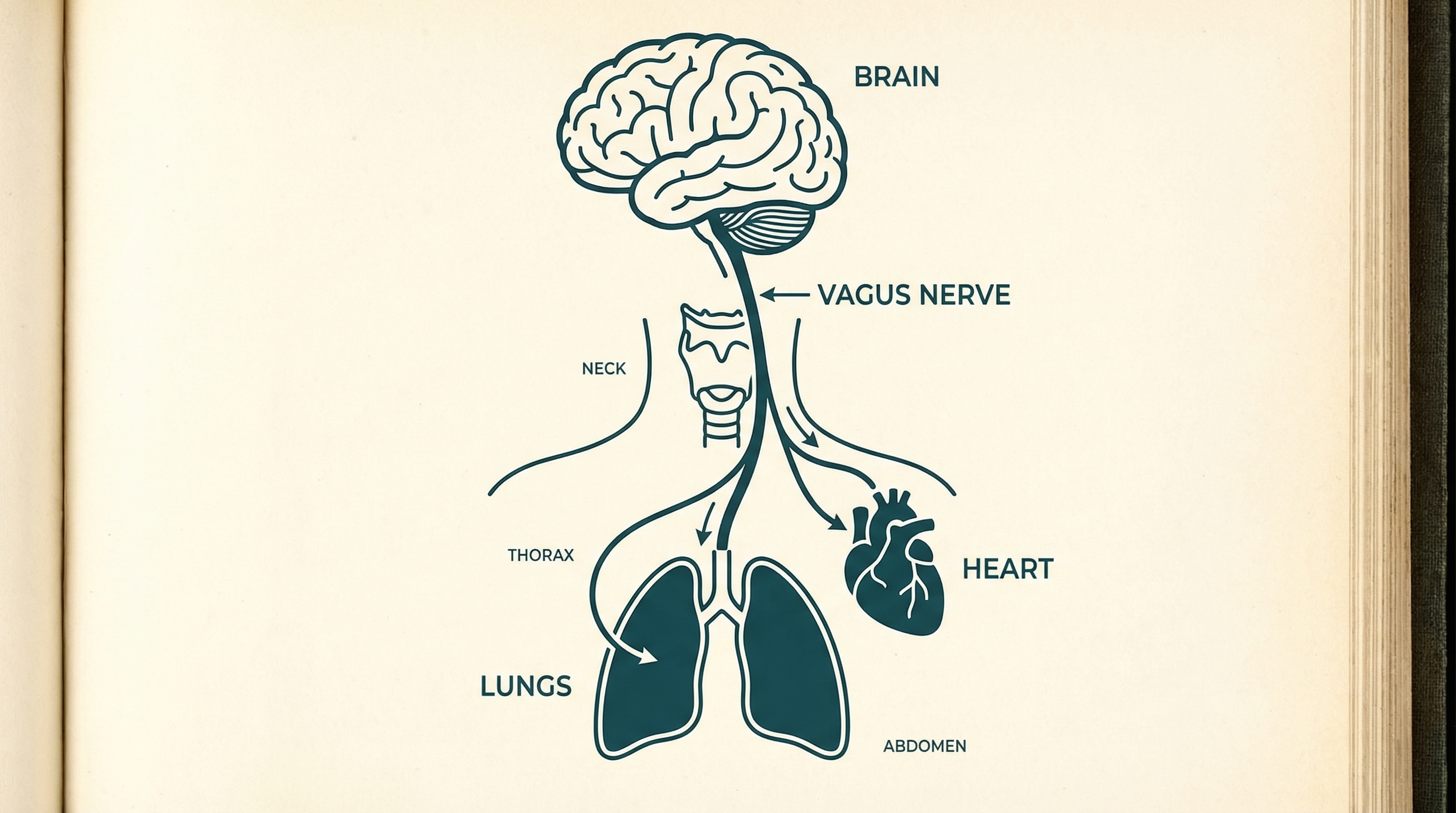
The autonomic nervous system operates below conscious awareness, governing heart rate, digestion, immune function, hormone release, and the body's overall stress response. It runs on two primary axes: the sympathetic system (fight-or-flight, energy mobilization, cortisol) and the parasympathetic system (rest-and-digest, recovery, vagal tone).
Heart rate variability (HRV) is the most accessible proxy for ANS balance. High HRV indicates robust parasympathetic activity, resilience, and adaptive capacity. Chronically low HRV is associated with cardiovascular disease, metabolic dysfunction, depression, anxiety, and all-cause mortality. A 2017 meta-analysis in Neuroscience and Biobehavioral Reviews (Forte et al.) found that HRV is a reliable biomarker for cognitive performance, emotion regulation, and general health across the lifespan.
Everyone talks about HRV. Almost no product does anything about it.
Why the ANS Gets Ignored
Sleep, nutrition, and exercise are concrete and measurable. You ran 5km. You ate 40g of protein. You slept 7.5 hours. The improvements show up on dashboards and feel like progress.
The ANS doesn't work that way. It's reactive. You can train it indirectly through exercise, sleep hygiene, and cold exposure, but these are slow, diffuse levers. And they do nothing in the moment when a stress cascade is actively unfolding.
The other problem is access. You can control what you eat. You can schedule your workouts. You cannot consciously direct your heart rate, your cortisol release, or your vagal tone. The ANS is, by definition, outside voluntary control.
Except for one pathway.
Breath Is the Only Direct Access Point
The respiratory system sits at a unique intersection of voluntary and involuntary control. It is the only visceral function that can be consciously overridden, and the only lever that directly influences ANS balance in real time.
The mechanism is well-established. Slow, controlled exhalation (extending the out-breath relative to the in-breath) directly activates the dorsal vagal complex, increasing parasympathetic tone and raising HRV within minutes. A landmark 2018 systematic review in Frontiers in Human Neuroscience by Zaccaro et al. analyzed 15 studies and found consistent evidence that slow breathing (10 breaths per minute or fewer) increases HRV, reduces cortisol, decreases anxiety and depression symptoms, and produces EEG changes associated with relaxation and improved emotional regulation.
This isn't meditation. It isn't mindfulness. This is deliberate autonomic modulation through a specific physiological mechanism. Pranayama, the ancient Indian science of breath, was doing this empirically for thousands of years before neuroscience could explain why it worked.
The Optimization Stack Has a Missing Layer
Zone 2 improves mitochondrial density. Strength training preserves muscle mass. Time-restricted eating optimizes metabolic flexibility. These are all interventions targeting downstream effects of poor health: metabolic disease, cardiovascular decline, immune dysfunction.
What none of them address is the upstream regulatory system that determines how well you recover from exercise, how efficiently your metabolism runs under stress, and how resilient your cardiovascular system is to acute challenges. That's the ANS. And the only tool that directly modulates it in real time is breath.
Vayu is built on this insight. HRV read from Apple Watch and Wear OS after each session. Haptic-guided pranayama protocols calibrated to your autonomic state, shaped by your last session. A visible feedback loop that shows your nervous system shift session by session.
70,000+ downloads. 15+ countries. 64% still practicing at 30 days in our strongest 2025 cohort.
The people who've found Vayu have found the missing layer in their optimization stack. The question is how long everyone else will keep ignoring the most important regulatory system in the human body.
Start optimizing your ANS today. Try Vayu free.
Practice These Techniques with Vayu
Haptic breathing guidance on Apple Watch and Wear OS, paced on your wrist so you do not need the screen. Developed with the SFU Metacreation Lab, supported by NRC IRAP. Your first session is free.
Continue Reading

Breathwork Is the Nutrient Your Health Is Missing
There's one health input almost nobody's tracking, even though it runs 24 hours a day and directly governs your nervous system. Your breath — not as a metaphor, but as a literal physiological input.
Mar 18, 2026
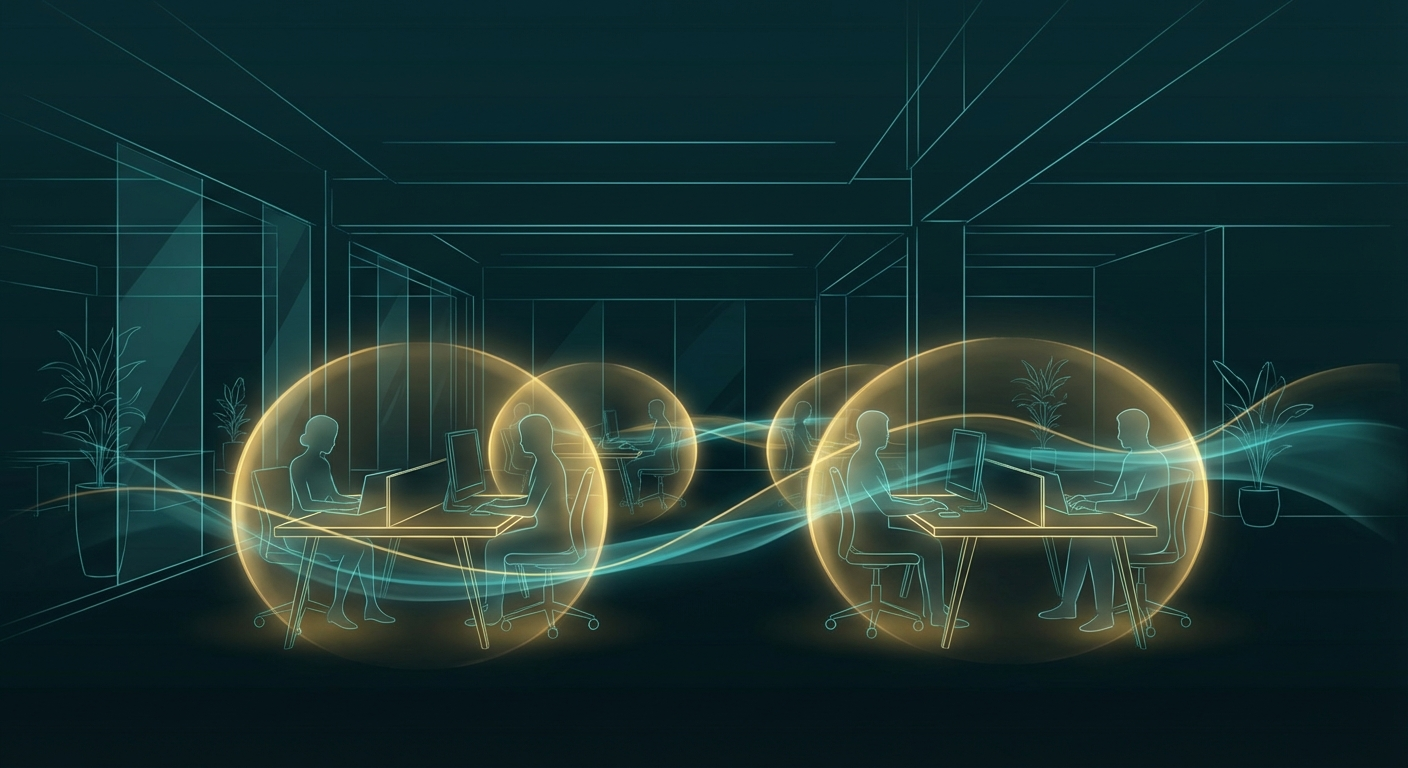
Why Your Workplace Needs to Breathe: The Case for Autonomic-Aware Enterprise Wellness
Corporate wellness is an $80B industry that isn't working. The missing layer: real-time nervous system support through micro-interventions that fit into a workday.
Mar 3, 2026
Coherent Breathing at 5 Breaths Per Minute: The Simple Practice That Changes Your Nervous System
Coherent breathing at 5 breaths per minute maximizes HRV and activates deep calm. Learn the science, how to practice, and why 6-second cycles are so powerful.
Feb 22, 2026