
The 90-Second Window: Why Stress Intervention Has to Be Real-Time or It's Useless
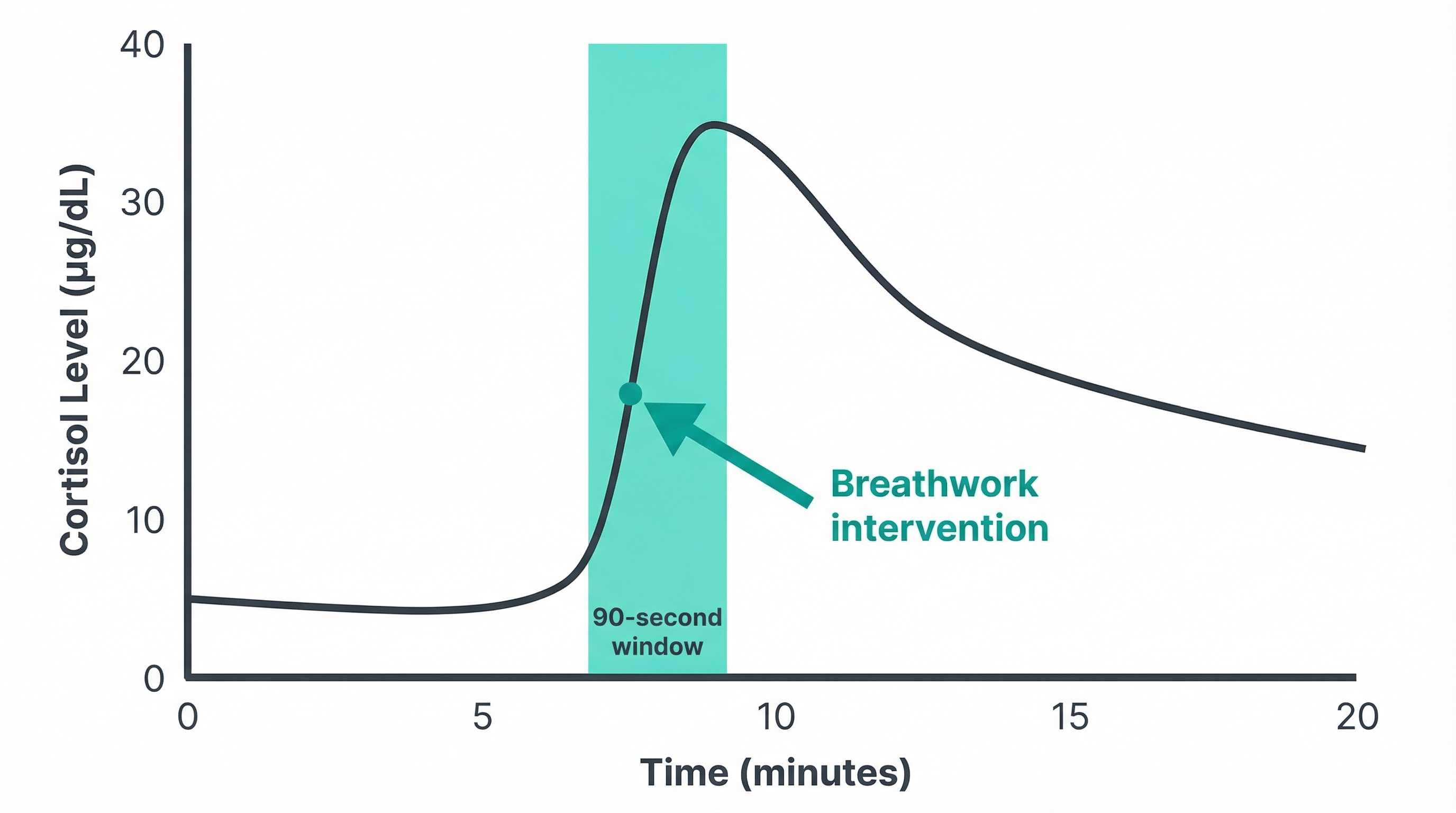
There is a 90-second window after a stress response kicks in when breathwork can interrupt a cortisol cascade. After that window closes, the stress response isn't a fire you can put out anymore. It's a fire you're managing the damage from.
Try this technique in Vayu, free download
Haptic guidance on Apple Watch and Wear OS. Your first session is free.
This isn't a metaphor. It's physiology. And it's why real-time intervention is the only kind that actually matters for acute stress.
The Neuroscience of the Stress Cascade
When the amygdala detects a threat (real or imagined), it triggers the hypothalamic-pituitary-adrenal axis. The hypothalamus signals the adrenal glands to release epinephrine within seconds. Heart rate climbs. Blood pressure rises. HRV drops as sympathetic tone surges and parasympathetic activity gets suppressed. This is the acute stress response, and it happens almost entirely below conscious awareness.
Within 90 seconds of this activation, the body has committed to a full sympathetic mobilization. Cortisol, the slower and more damaging stress hormone, starts cascading from the adrenal cortex. Glucose pours into the bloodstream. Digestion suppresses. Immune function temporarily dials back. Prefrontal cortex activity (the rational, decision-making part of your brain) dims as resources shift toward the limbic system and motor cortex.
Neuroscientist Jill Bolte Taylor, who documented her own stroke recovery and became a leading researcher on emotional processing, called this the "90-second rule" for emotional chemistry: the neurological surge lasts about 90 seconds if you don't feed it. After that, your continued stress is a choice. Or more accurately, a habit loop that keeps the activation running.
Here's the critical piece: there is an intervention that can interrupt that initial 90 seconds. But it has to be applied during the window, not after.
Breath as the Emergency Brake
The autonomic nervous system is bidirectionally linked to the respiratory system via the vagus nerve. Extended exhalation (making the out-breath longer than the in-breath) directly activates the dorsal vagal complex and increases parasympathetic tone within seconds to minutes of practice.
A 2018 systematic review in Frontiers in Human Neuroscience by Zaccaro et al. found consistent evidence across 15 studies that slow breathing techniques (10 breaths per minute or fewer) produce significant increases in HRV, reductions in sympathetic activity, and decreases in cortisol and anxiety. The effects begin within minutes, fast enough to catch a stress response before it fully commits.
The mechanism isn't relaxation. It's active autonomic modulation. The breath-heart-brain connection via the vagus nerve runs in both directions. Just as stress suppresses the vagus nerve and collapses HRV, deliberately driving the vagus nerve through extended exhalation can interrupt the stress response in its early stages, before cortisol has fully cascaded, before the window has closed.
This is why breathwork-based intervention has to be real-time. A breathing exercise you do at 6pm to recover from the stress of 2pm isn't treating the acute response. It's managing the aftermath. Important, yes. But fundamentally different from interrupting the cascade at the moment it starts.
Why Apps Miss the Window
The problem with most wellness apps is timing. Guided meditation content is asynchronous by design: you schedule a session, you sit down, you press play. By the time you've navigated to the app, chosen a session, and started breathing, the 90-second window has been closed for five minutes.
Passive monitoring tools (wearables) detect the stress response in real time but offer no intervention. They log the cascade. They don't interrupt it.
What the 90-second window demands is a tool that is already on your wrist when the shift happens, delivers a calibrated breathing protocol immediately, and shows you afterward that the intervention worked. The delivery has to land inside the window.
Designing for the Window
Vayu was built around this constraint. Sessions launch in seconds from the watch. Haptic guidance means you don't need to look at a screen to follow the protocol: your wrist leads the breath. Afterward, the app reads your HRV from Apple Watch or Wear OS and uses it to shape the next session.
The science of the 90-second window isn't a product feature. It's a design requirement. Every decision in Vayu's architecture (haptic delivery, post-session HRV feedback, one-tap session launch) exists because of this constraint.
After the window closes, you can still breathe your way back toward coherence. Recovery is always possible. But prevention, catching the cortisol cascade before it fully fires, requires meeting the physiology where it is. Right now. In this moment. With a tool that's already reading your nervous system.
The 90 seconds starts when the stressor hits. Not when you get home and decide to meditate.
Download Vayu and be ready for the window when it opens. Your nervous system can't wait for a convenient time to intervene.
Practice These Techniques with Vayu
Haptic breathing guidance on Apple Watch and Wear OS, paced on your wrist so you do not need the screen. Developed with the SFU Metacreation Lab, supported by NRC IRAP. Your first session is free.
Continue Reading
What Peter Attia Got Right (And What's Still Missing)
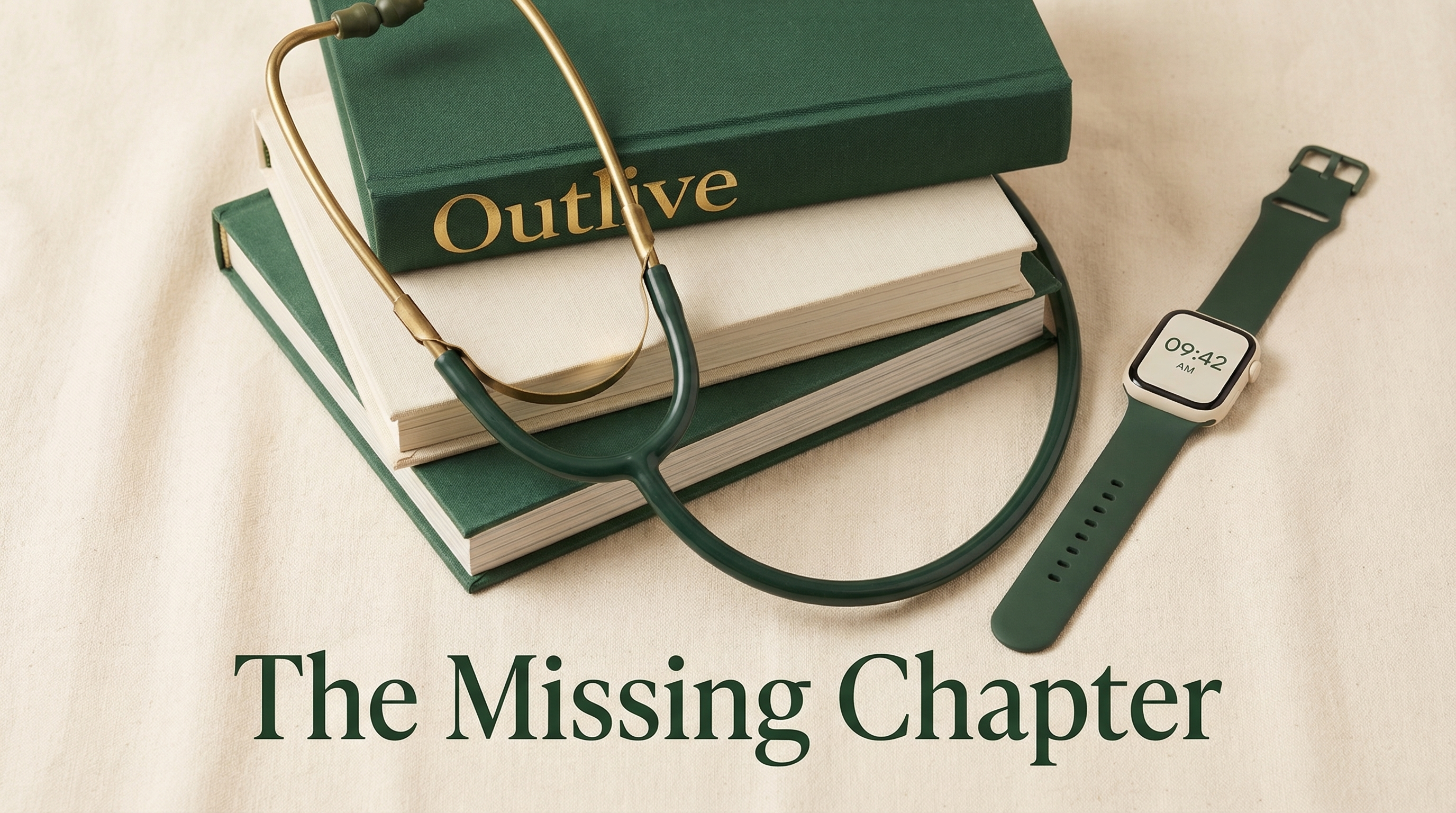
Peter Attia's Outlive framework is the best longevity prescription available. Zone 2, sleep, strength, nutrition. All correct. But the stress regulation chapter is thin. Real-time ANS intervention is the missing piece.
Mar 22, 2026

The Three-Minute Window: Breathing for Faster Exercise Recovery
Heart rate recovery is one of the most useful markers in training. What slow breathing between sets actually does, what it does not do, and why hands on knees beats hands on head.
Sep 15, 2026
Why Your Workplace Needs to Breathe: The Case for Autonomic-Aware Enterprise Wellness
Corporate wellness is an $80B industry that isn't working. The missing layer: real-time nervous system support through micro-interventions that fit into a workday.
Mar 3, 2026