We breathe around 20,000 times a day—yet most of us unknowingly train our bodies for chronic stress with every breath. Here's what modern breathing habits get wrong, what "right breathing" actually means, and how pranayama techniques can become practical tools for calm, focus, and resilience.
Disclaimer: This article is educational, not medical advice. If you have heart or lung conditions, uncontrolled blood pressure, panic disorder, are pregnant, or have a history of fainting, start gently and consult a healthcare provider.
Table of Contents
- 1. The Modern Problem: Over-Breathing
- 2. Why CO₂ Matters More Than You Think
- 3. What Right Breathing Looks Like
- 4. The Science Behind Pranayama
- 5. Two Breathing Exercises You Can Try Today
- Frequently Asked Questions
1. The Modern Problem: We Over-Breathe
"Over-breathing" doesn't mean breathing more often. It means taking in more air than your body needs for the present moment—especially when stressed, scrolling, or sitting with poor posture.
Common signs of dysfunctional breathing patterns include:
- Chronic mouth breathing (especially during sleep)
- Upper-chest breathing instead of diaphragm-led breathing
- Fast, irregular breathing rhythm that keeps the nervous system in "fight or flight" mode
This matters because breathing is one of the fastest ways to change your blood chemistry and nervous system state. Shift your breath, and you shift your physiology.
Image: Unsplash (free license). View source
2. It's Not Just Oxygen—Carbon Dioxide Is the Secret Signal
Most people assume breathing is mainly about getting more oxygen. But in healthy individuals at rest, oxygen saturation is usually already near 100%.
What changes quickly with breathing is carbon dioxide (CO₂). CO₂ is not just "waste gas"—it directly influences:
- Your breathing drive (chemoreceptor sensitivity)
- Blood pH balance
- Blood flow to the brain
- How efficiently oxygen releases from hemoglobin (the Bohr effect)
If you chronically over-breathe—especially with fast mouth breathing—you can drop CO₂ levels. This can trigger sensations like lightheadedness, tingling, air hunger, or anxiety. Then you breathe more to "fix it," and the cycle intensifies.
Right breathing isn't dramatic breathing. It's calm, nasal, rhythmic—and tolerant of normal CO₂ fluctuations.
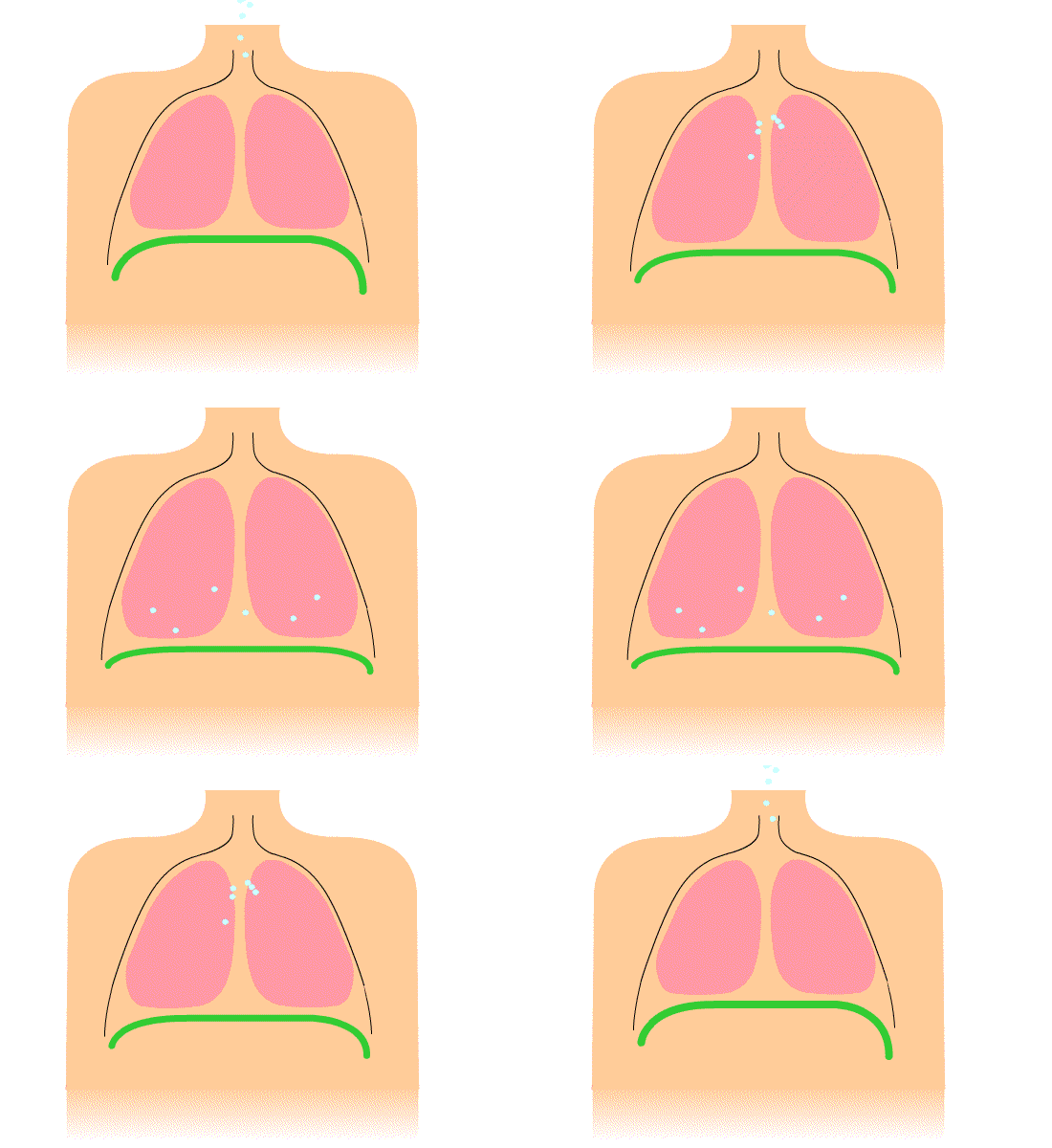
Image: Diaphragmatic breathing animation. Source: Wikimedia Commons
3. What Right Breathing Looks Like (4 Simple Principles)
There's no single "perfect" breathing pattern, but these evidence-based principles appear across physiology research and traditional pranayama:
- Nose-first breathing: Breathe through your nose most of the time, especially during sleep. Nasal breathing filters, warms, and humidifies air while slowing your breathing rate naturally.
- Diaphragm-led breathing: Focus on quiet, low-rib expansion rather than lifting your shoulders. This engages the diaphragm properly.
- Slower breathing rhythm: A smooth, longer exhale activates the parasympathetic nervous system. Think of the exhale as your "brake pedal."
- Smaller, quieter breaths: Forced "deep breathing" can actually overstimulate. Gentle is often more regulating than dramatic.
4. Why Pranayama Still Matters (Even If You're Not "Spiritual")
Pranayama is often translated as "breath control," but it's better understood as training the interface between body and attention.
Breath is unique: it's both automatic (controlled by your brainstem) and voluntarily controllable (via your cortex). This makes breath a bridge—you can use conscious breathing to influence your unconscious physiological state.
Modern research increasingly supports what yogis observed for millennia:
- Slow breathing can shift autonomic balance toward parasympathetic dominance (rest and recovery)
- Rhythmic breathing improves baroreflex sensitivity (blood pressure regulation)
- Controlled breathing activates emotional regulation pathways in the brain
Pranayama isn't mysticism—it's applied psychophysiology with thousands of years of refinement.
5. Two Breathing Exercises You Can Try Today
A) 5-Minute Calm Down (Nasal Breathing with Extended Exhale)
Best for: Stress relief, pre-sleep, before important conversations
- Inhale through your nose for 4 seconds (quiet, low ribs expand gently)
- Exhale through your nose for 6 seconds (smooth, unforced)
- Repeat for 5 minutes
If 4:6 feels like too much, try 3:4. The goal is ease, not strain.
B) 10-Minute Resonance Breathing (HRV Training)
Best for: Daily nervous system regulation, improving heart rate variability
- Breathe at approximately 5–6 breaths per minute (e.g., inhale 5 seconds, exhale 6 seconds)
- Continue for 10 minutes
- If you feel lightheaded, make each breath smaller and quieter
Start Training Your Breath Today
Breathing is a daily vote for the physiological state you live in. Every inhale and exhale shapes your nervous system, focus, and emotional resilience.
If you want guided breathing sessions that make it simple—calm when you need calm, energy when you need energy—download Vayu and start with a free 5-minute reset.
Download Vayu:
Download on iOS | Download on Android
Frequently Asked Questions
What is the correct way to breathe?
The correct way to breathe for most daily situations is: through the nose, led by the diaphragm (not upper chest), at a slow and steady rhythm, with a slightly longer exhale than inhale. This pattern supports parasympathetic nervous system activation and optimal CO₂ balance.
Is mouth breathing bad for you?
Chronic mouth breathing—especially during sleep—is associated with poorer sleep quality, increased risk of sleep-disordered breathing, dry mouth, and keeping the nervous system in a more activated state. Nasal breathing is preferred for most situations.
What are the benefits of pranayama?
Research shows pranayama (yogic breathing) can support autonomic nervous system regulation, improved heart rate variability (HRV), reduced stress and anxiety, better emotional regulation, and enhanced focus. Different techniques produce different effects—some are calming, others energizing.
How many breaths per minute is healthy?
Normal resting breathing rate is 12–20 breaths per minute. However, slower breathing (around 5–6 breaths per minute) during intentional practice has been shown to improve HRV and activate the parasympathetic nervous system.
Can breathing exercises help with anxiety?
Yes. Slow, controlled breathing—especially with an extended exhale—can reduce sympathetic nervous system activity and promote a calmer state. This is one reason breathwork is used in clinical settings for anxiety management.
References
- Russo, M.A. et al. (2017). The physiological effects of slow breathing in the healthy human. Breathe (ERS). Read study
- Lehrer, P. & Gevirtz, R. (2014). Heart rate variability biofeedback: how and why does it work? Frontiers in Psychology. Read study
- Zaccaro, A. et al. (2018). How Breath-Control Can Change Your Life: A Systematic Review on Psycho-Physiological Correlates of Slow Breathing. Frontiers in Human Neuroscience. Read study