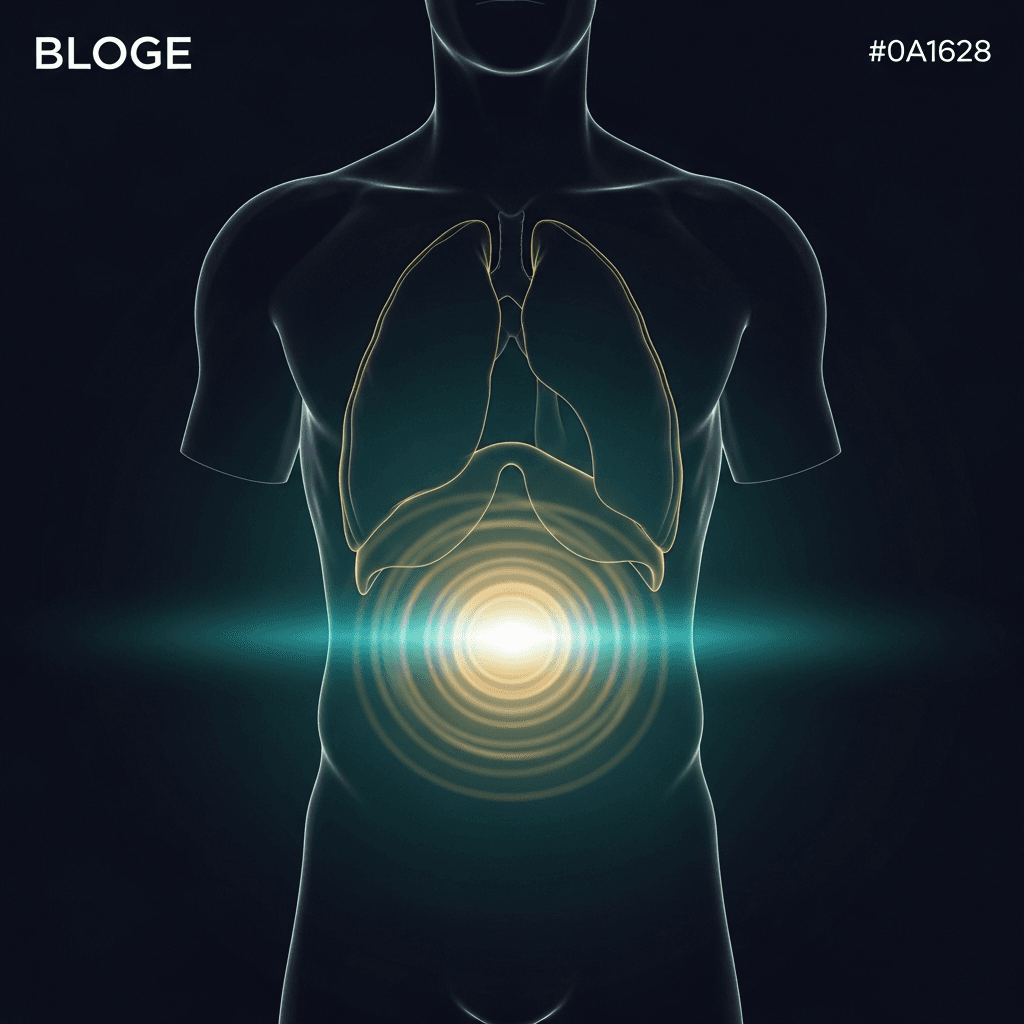
Here's something that might surprise you: most adults breathe incorrectly. Not catastrophically — you're still alive, after all — but inefficiently, in a way that keeps the stress response perpetually simmering.
Shallow, chest-dominant breathing is so common it's become the cultural default. We sit hunched at desks, hold tension in our shoulders, and take short, rapid breaths that barely reach the lower lobes of our lungs. Over years and decades, this pattern reshapes the nervous system, raising baseline cortisol, suppressing HRV, and making anxiety the body's normal state.
Diaphragmatic breathing — sometimes called belly breathing or abdominal breathing — is the antidote. It's not just one technique among many; it's the foundation that every other breathwork practice builds on. If you learn one thing about breathing, make it this.
What Is Diaphragmatic Breathing?
The diaphragm is a dome-shaped muscle that sits beneath your lungs, separating the chest from the abdomen. It's the primary muscle of respiration — designed to do the heavy lifting of every breath.
Diaphragmatic breathing means using your diaphragm fully and correctly: on inhale, the diaphragm contracts and flattens downward, creating negative pressure that draws air deep into the lower lungs. The belly rises. The lower ribs expand laterally. The chest remains relatively still.
Most people — especially under stress — breathe the opposite way: the chest lifts, the belly stays flat, and the diaphragm barely moves. This is called accessory muscle breathing, and it engages the muscles of the neck and upper chest rather than the diaphragm. It's efficient for sprinting. For sitting at a computer, it's a chronic stress signal.
Restoring diaphragmatic breathing is often described as "relearning how to breathe." Ironically, it's how we all breathed as infants — watch a sleeping baby's belly rise and fall. Stress, poor posture, and cultural conditioning trained it out of us.
The Science: Why Belly Breathing Changes Your Nervous System
The link between diaphragmatic breathing and nervous system regulation is well-established:
Vagal stimulation: The diaphragm is anatomically adjacent to the vagus nerve, the highway of the parasympathetic nervous system. Deep diaphragmatic movement mechanically stimulates vagal afferents, sending "rest" signals directly to the brainstem. A 2017 study in Frontiers in Psychology found that diaphragmatic breathing training significantly increased both HRV and reduced salivary cortisol compared to controls.
Lung receptor activation: The lower lobes of the lungs — where most of the lung's blood supply is concentrated — contain stretch receptors that trigger parasympathetic responses when adequately inflated. Chest breathing that only fills the upper third of the lungs never activates these receptors.
Breath rate reduction: Diaphragmatic breaths are naturally slower than chest breaths. Slowing breath rate to 6–10 breaths per minute increases HRV by synchronizing respiration with cardiovascular rhythms (the baroreflex).
Cortisol reduction: A 2017 randomized controlled trial in Frontiers in Psychology assigned participants to diaphragmatic breathing or control conditions. The breathing group showed significant reductions in cortisol after just 20 sessions, along with improved attention and cognitive performance.
GABA release: Research suggests that deep, slow breathing increases GABA (gamma-aminobutyric acid) activity in the brain — the primary inhibitory neurotransmitter. Low GABA is associated with anxiety disorders. Yoga-based breathing programs that emphasize diaphragmatic breathing have shown increases in brain GABA levels (Streeter et al., Journal of Alternative and Complementary Medicine, 2010).
How to Practice Diaphragmatic Breathing: Step-by-Step
The basic check — are you belly breathing now?
Place one hand on your chest and one hand on your belly. Take a normal breath. Which hand moves first and most? If it's your chest, you're a chest breather. That's what we're fixing.
Learning the technique:
Lie on your back for your first few sessions — gravity makes it easier to feel the diaphragm working. Progress to seated once the pattern is familiar.
Place one hand on your sternum (chest) and one hand on your navel. The goal: chest hand stays relatively still; belly hand rises on inhale and falls on exhale.
Breathe in slowly through your nose for a count of 4. Feel your belly push your hand upward as the diaphragm pulls down and the abdomen expands. Let your lower ribs flare slightly outward.
Breathe out slowly through your nose or mouth for a count of 4–6. Feel your belly fall as the diaphragm relaxes upward.
Focus on the belly-first sensation. Think of the breath as filling from the bottom up: belly, then lower ribs, then (minimally) chest.
Practice for 5–10 minutes daily, progressing to continuous diaphragmatic breathing throughout the day.
The advanced check — seated or standing:
Once you can do it lying down, practice seated. Many people revert to chest breathing when they sit up. If that happens, focus on softening the belly — releasing the tension in the abdominal muscles that prevent the diaphragm from descending.
Tips & Common Mistakes
Tips:
- Soften your belly. Chronically tense abdominal muscles — a cultural norm, especially for women who've been told to "hold their stomach in" — physically prevent diaphragmatic breathing. Let go.
- Exhale longer than you inhale. A 1:2 inhale-to-exhale ratio (4 seconds in, 8 out) maximizes the parasympathetic response.
- Practice in the car, at your desk, before meals. Diaphragmatic breathing can become your default mode with consistent practice — and that's the goal.
- Check posture. A slumped spine compresses the diaphragm. Sit upright, ideally with a slight lumbar curve.
Common Mistakes:
- Pushing the belly out forcefully. Diaphragmatic breathing isn't about puffing your belly like a balloon. The belly rise is a consequence of the diaphragm moving, not an action in itself. Let it happen.
- Holding tension in the shoulders. Shoulder tension and diaphragmatic breathing are mutually exclusive. Do a shoulder roll and drop before each practice session.
- Only doing it as a "technique." The long-term goal is to retrain your default breathing pattern — not just use diaphragmatic breathing as a 5-minute exercise.
- Giving up because it feels unnatural at first. If belly breathing feels strange or forced, that's because you've been chest breathing for years. Stick with it. The natural feeling comes.
How Vayu Helps
Vayu was designed with diaphragmatic breathing as its foundation. Every session in the app begins with a brief calibration that checks your breath pattern, and the haptic guidance is timed to encourage the belly-first breathing rhythm.
The real-time HRV feedback is particularly valuable here: as you shift from chest breathing to full diaphragmatic breathing, your HRV responds visibly. You can watch your nervous system regulation improve in real time — which makes the sometimes-abstract concept of "breathing correctly" suddenly very concrete and motivating.
For beginners, Vayu's guided diaphragmatic breathing sessions are the ideal starting point before moving on to more advanced techniques.
Download Vayu on iOS or Android →
FAQ
Q: What is the difference between diaphragmatic breathing and deep breathing? They're related but not identical. "Deep breathing" often refers to taking large breaths, which some people achieve by lifting the chest. Diaphragmatic breathing specifically refers to how the breath is generated — using the diaphragm muscle rather than accessory chest muscles. You can breathe deeply without using your diaphragm (shallow depth into the lower lungs), and vice versa. True diaphragmatic breathing is slower, more efficient, and more effective for nervous system regulation than simple deep breathing.
Q: How long does it take to retrain your breathing to be diaphragmatic? Most people notice the pattern shift within 2–4 weeks of consistent daily practice. Making it your default resting breathing pattern — the way you breathe all day without thinking about it — typically takes 6–12 weeks. Short daily practice sessions (5–10 minutes) are more effective than occasional longer sessions for retraining habitual patterns.
Q: Can diaphragmatic breathing help with anxiety? Yes — significantly. Diaphragmatic breathing directly engages the parasympathetic nervous system via vagal stimulation and slows breath rate, both of which counteract the physiological markers of anxiety (elevated heart rate, cortisol, muscle tension). Multiple clinical trials have shown it effective for generalized anxiety disorder, panic disorder, and stress-related conditions. It's recommended by the American Institute of Stress as a core anxiety management tool.