The deal we didn't agree to
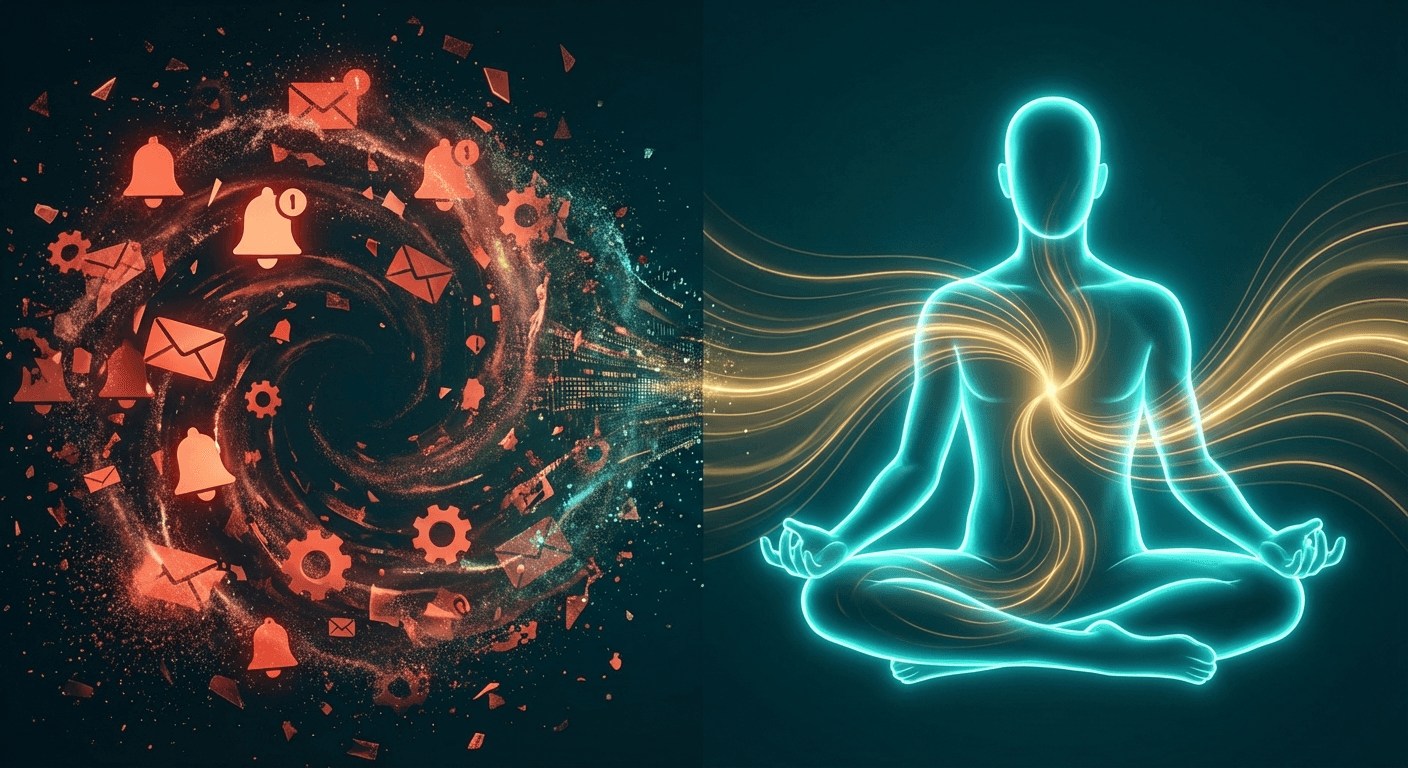
Somewhere around 2010, the implicit contract between humans and technology changed. It used to be: you use the tool, the tool does a job, you put it down. A calculator. A word processor. A phone.
Then the business model shifted. Technology companies discovered that human attention could be harvested, packaged, and sold at scale. The tool stopped being a tool. It became an extraction machine.
The attention economy operates on a simple equation: your distraction equals their revenue. Every second you spend scrolling, refreshing, or switching tabs represents value. Not for you, but for the platform selling your eyeballs to advertisers.
The damage is documented. Average attention span on a single screen fell from 150 seconds in 2004 to 47 seconds in 2023, according to UC Irvine research. Context switching between tasks now happens every 3 minutes in modern knowledge work, with a 23-minute recovery cost per switch (Gloria Mark, Attention Span). Anxiety disorders in young adults have increased 25% since 2019, with social media use as a significant correlating factor (WHO, 2023). Burnout rates among knowledge workers exceed 40% globally (Gallup, 2024).
These aren't personal failures. They're system failures. The technology that surrounds us was designed, often brilliantly, to fracture the very cognitive capacities we need to function.
What the humane tech movement got right, and missed
The Center for Humane Technology, the Digital Wellness Alliance, and Screen Time tools responded correctly: this is a design problem, not a willpower problem.
But the solutions have been primarily subtractive. Reduce screen time. Limit notifications. Grayscale your phone. Digital detox weekends.
This is necessary but not enough. It's like telling someone with a nutritional deficiency to "just eat less junk food" without offering actual nourishment. The absence of harm is not the presence of health.
What's missing is an affirmative vision. Not just less bad technology, but technology that actively makes us more capable, more aware, more connected to our own experience.
From attention to awareness
We're proposing a different economic model for human-technology interaction. Not the attention economy, but the awareness economy.
In the attention economy, the core metric is time on screen. Success means you stayed. The mechanism is capturing attention. You feel depleted afterward. You're a consumer of content. The business model sells your attention.
In the awareness economy, the core metric is quality of state. Success means you grew. The mechanism is cultivating awareness. You feel resourced afterward. You're an author of your own experience. The business model serves your autonomy.
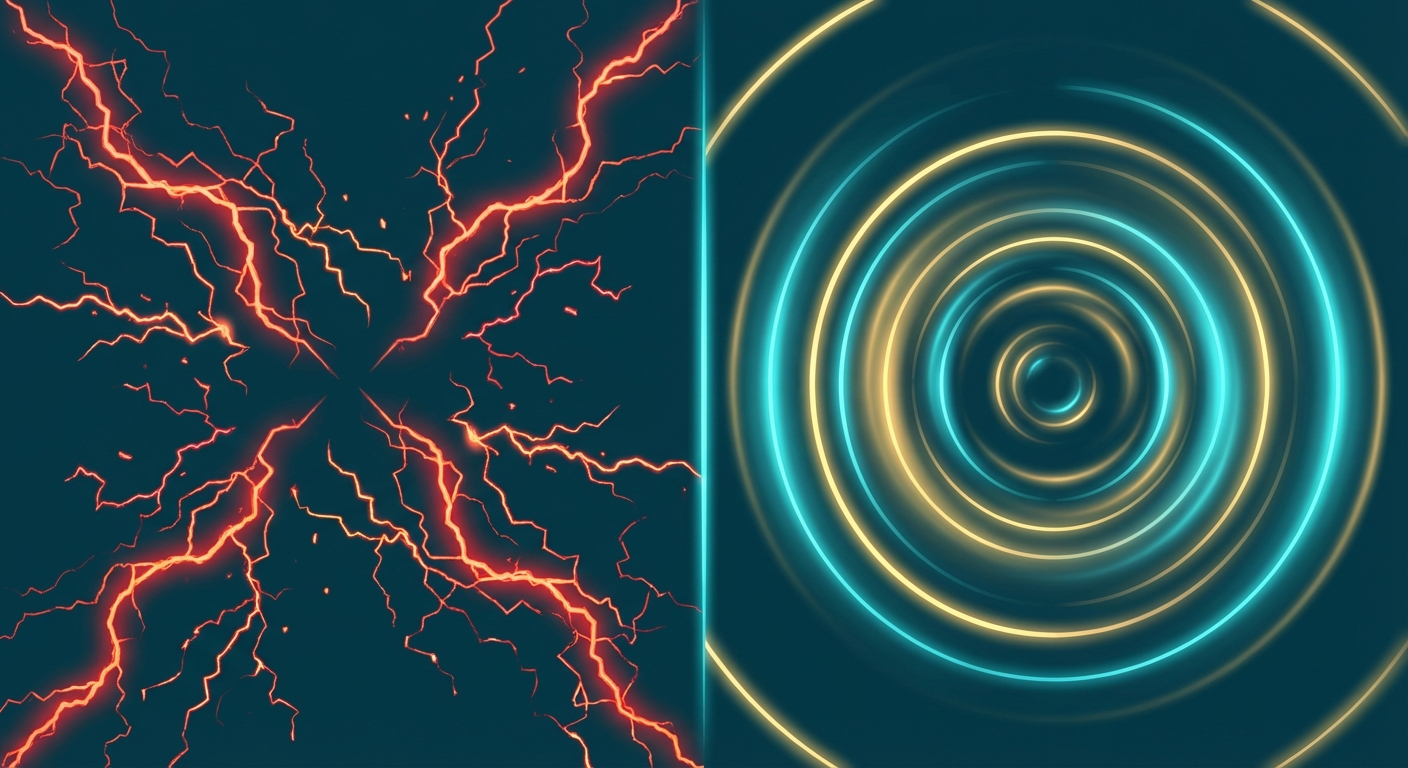
The value exchange is different. You don't pay with your attention. You invest in your awareness. And the technology's job is to return on that investment, not in engagement metrics, but in genuine human capacity.
What this looks like
An awareness economy platform would measure what matters. Not time-on-app, but quality-of-state-after-app. Did the user's HRV improve? Did their self-reported focus increase? Did they feel more capable of facing their day? These are measurable outcomes that align business incentives with human health.
It would deliver less, not more. The best notification is the one that doesn't fire because the system recognizes you're already in flow. The best breathwork session is the one that ends early because your HRV stabilized faster than expected. Less is not a failure mode. It's the design goal.
It would build capability, not dependency. The ultimate measure of a conscious computing system is whether the user needs it less over time. If Vayu helps you develop interoceptive awareness, the felt sense of your own nervous system state, you'll eventually recognize a stress response before a device needs to tell you. The technology scaffolds a skill, then steps back.
And it would respect physiological timing. Information delivery should respect the body's readiness. A cortisol spike at 3 PM isn't the time to deliver a complex project update. A parasympathetic window after morning breathwork might be the ideal moment for creative work. Conscious computing reads these rhythms and works with them.
The science behind state-aware design
This isn't speculative. The physiological foundation is solid.
HRV correlates with cognitive readiness. High HRV is associated with better executive function, emotional regulation, and creative problem-solving (Thayer & Lane, 2009). Controlled breathing at 0.1 Hz, approximately 6 breaths per minute, maximizes respiratory sinus arrhythmia and vagal tone (Lehrer & Gevirtz, 2014). People with better awareness of internal bodily signals show improved emotional regulation and decision-making (Critchley & Garfinkel, 2017). And cognitive performance cycles in approximately 90-minute waves throughout the day (Kleitman, 1963), so technology that respects these rhythms outperforms technology that ignores them.
The tools to build awareness-centric systems exist. Wearable sensors. Adaptive algorithms. Biosignal processing. Generative AI for personalized interventions. What's been missing is the design philosophy that ties them together.
The business case
"This sounds idealistic. Can it make money?"
Yes. And arguably more sustainably than attention extraction.
The global wellness economy is valued at $6.3 trillion (Global Wellness Institute, 2024). Corporate wellness programs alone exceed $80 billion annually. The HRV biofeedback app market is projected to reach $2.4 billion by 2030.
But the deeper business case is about retention through genuine value rather than manipulation. Subscription models where users stay because they're getting healthier, not because they're hooked, produce higher lifetime value, lower churn, and stronger word-of-mouth than engagement traps.
Vayu's approach, AI-personalized breathwork that adapts to your HRV and builds real autonomic regulation skills, is a working example. Users don't need to be tricked into opening the app. They open it because they feel measurably better when they do.
An invitation
The awareness economy isn't a utopian fantasy. It's a design choice available to every team building technology today.
It starts with a single question: does this interaction leave the user more aware of themselves, or less?
If every product team asked that question honestly, the entire landscape of human-technology interaction would shift. Not because of regulation or public pressure, but because it's better business and better humanity, simultaneously.
We're building Vayu as proof that this works. But the vision is bigger than any single product. It's a shift in what technology is for.
Dhruv Adhia is the co-founder of Prana Labs, building at the intersection of neuroscience, adaptive AI, and contemplative practice. He is a PhD researcher at Simon Fraser University's Metacreation Lab.