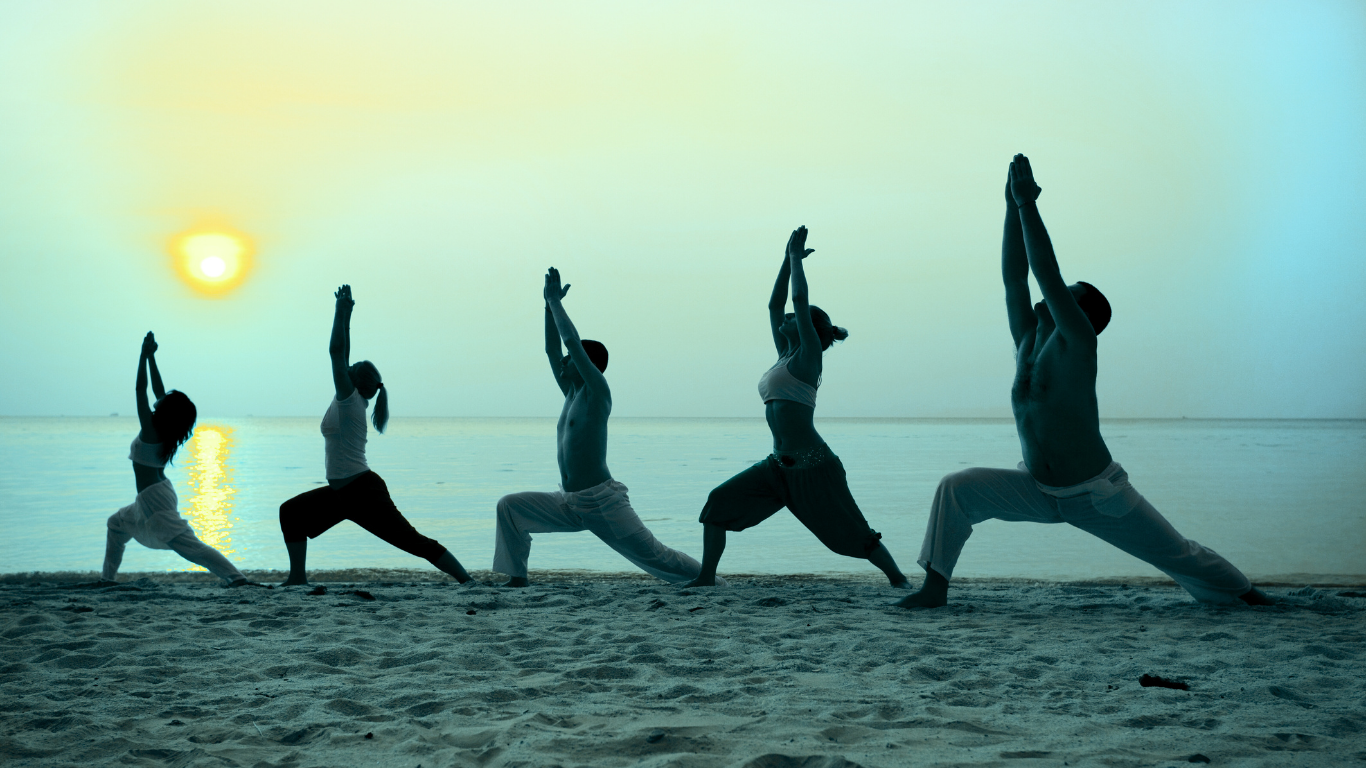
Exploring Ashtangyog: The Eight-Limbed Journey to Wholeness
Yoga is far more than a series of physical postures—it’s a comprehensive system for personal growth, self-discipline, and inner transformation. At the heart of this expansive tradition lies Ashtangyog, also known as the eight-limbed path of yoga. Codified by the sage Patanjali in his seminal Yoga Sutras, Ashtangyog offers a holistic blueprint for achieving a balanced, fulfilled, and enlightened life. In this blog, we’ll explore the philosophy, structure, and practical benefits of embracing Ashtangyog as a way of living.
Try this technique in Vayu, free download
Haptic guidance on Apple Watch and Wear OS. Your first session is free.
What Is Ashtangyog?
The term Ashtangyog derives from the Sanskrit words 'ashta' (eight) and 'anga' (limbs or parts). It represents an eightfold path designed to address every facet of human existence—from ethical behavior and physical health to mental focus and spiritual awakening. Rather than viewing yoga solely as a physical exercise regimen, Ashtangyog invites us to cultivate a deeper, integrated approach to life.
Patanjali’s eight limbs guide us step by step, beginning with ethical conduct and culminating in a state of transcendental consciousness. The beauty of this system is that it acknowledges the interconnectedness of body, mind, and spirit, encouraging a practice that nurtures all aspects of our being.
The Eight Limbs of Ashtangyog
Let’s delve into each of the eight limbs and discover how they contribute to a holistic path toward self-realization:
Yama (Ethical Restraints)
Overview: Yama outlines universal ethical guidelines that form the foundation for a harmonious life. These include principles such as non-violence (ahimsa), truthfulness (satya), non-stealing (asteya), moderation (brahmacharya), and non-possessiveness (aparigraha).
Practical Impact: By adhering to these ethical restraints, we cultivate a sense of moral integrity and build healthier relationships with ourselves and others.
Niyama (Personal Observances)
Overview: Complementing Yama, Niyama offers guidelines for personal discipline and spiritual observances. The five niyamas are cleanliness (saucha), contentment (santosha), austerity (tapas), self-study (svadhyaya), and surrender to a higher power (ishvara pranidhana).
Practical Impact: These practices help develop self-awareness, foster a positive inner environment, and encourage the pursuit of personal growth.
Asana (Physical Postures)
Overview: Most commonly recognized as yoga postures, asanas are designed to develop physical strength, flexibility, and balance. They also prepare the body for the practice of meditation.
Practical Impact: Regular practice of asanas not only enhances physical health but also establishes a foundation of mental discipline and focus.
Pranayama (Breath Control)
Overview: Pranayama involves the regulation of the breath—the vital life force (prana). Through various techniques of breath control, practitioners can influence their mental and physical states.
Practical Impact: Effective pranayama practice improves oxygenation, reduces stress, and supports the purification of both body and mind.
Pratyahara (Withdrawal of the Senses)
Overview: Pratyahara encourages the turning of attention inward by withdrawing the senses from external distractions. This limb serves as a bridge between the physical and the mental aspects of the practice.
Practical Impact: Cultivating pratyahara fosters inner focus and prepares the mind for the deeper states of concentration and meditation.
Dharana (Concentration)
Overview: Dharana is the practice of focused attention on a single point or object. This could be the breath, a mantra, or a visual symbol.
Practical Impact: By training the mind to concentrate, dharana helps diminish mental clutter, enabling deeper states of meditation.
Dhyana (Meditation)
Overview: Building on dharana, dhyana represents sustained, uninterrupted meditation. It is the practice of maintaining a calm, focused awareness.
Practical Impact: Regular meditation deepens self-understanding and cultivates an inner peace that permeates everyday life.
Samadhi (Absorption or Enlightenment)
Overview: The final limb, samadhi, is the state of transcendence where the practitioner experiences complete union with the object of meditation. It is often described as the pinnacle of the yogic journey.
Practical Impact: Achieving samadhi results in profound inner freedom and an experience of bliss beyond the confines of the individual self.
The Holistic Benefits of Ashtangyog
1. Integration of Body, Mind, and Spirit
Ashtangyog is unique in its comprehensive approach to personal development. By addressing ethical behavior, physical health, mental focus, and spiritual growth, it encourages a well-rounded, harmonious lifestyle. This integrated practice not only improves overall well-being but also helps in achieving a balanced, centered life.
2. Personal Transformation
Each limb of Ashtangyog builds upon the other, guiding practitioners through a gradual process of self-discovery and transformation. Whether it’s developing ethical integrity through Yama and Niyama or cultivating deep inner peace through meditation, this system supports ongoing personal evolution.
3. Stress Reduction and Mental Clarity
Through practices such as asana, pranayama, and meditation, Ashtangyog offers powerful tools to manage stress and clear mental clutter. This not only improves focus and concentration but also promotes emotional resilience in the face of life’s challenges.
4. Enhanced Self-Awareness
By incorporating self-study (svadhyaya) and introspective practices, Ashtangyog encourages us to explore our inner landscapes. This heightened self-awareness can lead to more mindful decision-making, improved relationships, and a deeper understanding of our true nature.
Integrating Ashtangyog into Your Daily Life
Adopting the eight-limbed path doesn’t necessarily mean overhauling your entire routine overnight. Here are some practical tips to start integrating Ashtangyog into your daily life:
Begin with Small Steps: Start by incorporating aspects of Yama and Niyama—simple ethical and personal practices—into your day.
Establish a Consistent Asana Practice: Regular physical postures create a stable foundation for further practice.
Dedicate Time to Pranayama and Meditation: Even a few minutes each day of focused breathwork and meditation can make a significant difference.
Reflect and Journal: Use the principles of self-study to reflect on your experiences and track your personal growth.
Remember, the journey of Ashtangyog is a gradual process. The key is consistency, self-compassion, and an openness to growth.
Practice These Techniques with Vayu
Haptic breathing guidance on Apple Watch and Wear OS, paced on your wrist so you do not need the screen. Developed with the SFU Metacreation Lab, supported by NRC IRAP. Your first session is free.
Continue Reading

Patanjali's 5 state of mind
In the profound wisdom of Patanjali's Yoga Sutras, the mind is depicted as a powerful yet restless entity that transitions through various states, deeply influencing our perceptions, actions, and well-being. Understanding these five distinct states provides a pathway toward inner peace, clarity, and purposeful living.
May 1, 2025

Invocation to Sage Patanjali
In the rich tapestry of yogic tradition, few texts resonate with as much depth and reverence as the invocation of Patanjali. This elegant salutation pays homage to a legendary sage whose contributions continue to shape the way we understand yoga, language, and well-being. Today, let’s journey through these powerful lines, unpacking their meaning and reflecting on how they continue to inspire modern practitioners.
Feb 11, 2025

Doshas and Pranayam
Ayurveda, an ancient holistic healing system from India, identifies three primary bioenergetic forces—doshas—known as Vata (air and ether), Pitta (fire and water), and Kapha (earth and water). Each individual possesses a unique combination of these doshas, which govern physical, emotional, and mental characteristics (e.g., Vata types tend to be energetic and creative but may experience anxiety when imbalanced) healthline.comen.wikipedia.org. Understanding one’s dominant dosha (Prakriti) and current imbalances (Vikriti) is foundational to maintaining health through targeted diet, lifestyle, and yogic practices. In particular, pranayama (breathwork) techniques can be tailored to pacify excessive qualities of each dosha: slow, grounding breaths for Vata; cooling breaths for Pitta; and energizing, warming breaths for Kapha. Below, we explore the nature of each dosha, signs of imbalance, and detailed instructions for dosha-specific pranayama practices.
Jun 6, 2025