Breath of Fire vs Kapalbhati vs Bhastrika: Not the Same


No. They are three different practices that share a fast pace and a lot of confusion. Kapalbhati is a hatha yoga cleansing technique: sharp exhales through the nose, passive inhales. Breath of Fire, from Kundalini Yoga, is faster and lighter, with an even rhythm. Bhastrika, the "bellows", makes both the inhale and the exhale forceful.
Try this technique in Vayu, free download
Haptic guidance on Apple Watch and Wear OS. Your first session is free.
The mix-up is not confined to yoga studios. A 2004 case report in Chest was titled "Kapalabhati pranayama: breath of fire or cause of pneumothorax?" A 2022 paper from the Patanjali Research Foundation glossed kapalabhati as "breath of fire", and a 2026 German study called it "bellows breath", which is what bhastrika means. If your teacher swaps the names, they are in good company.
It still matters which one you are doing, because speed, force and cautions differ. For step-by-step technique, see our kapalbhati guide and bhastrika guide.
The three at a glance
- Kapalbhati ("skull shining"). A short, forceful exhale through the nose, made by snapping the lower belly inward; the inhale happens on its own. Most lab studies run it at about one exhale per second, advanced practitioners at two. It is taught in rounds, with rests.
- Breath of Fire (agni praan). About two to three breath cycles per second, continuous and evenly timed, through the nose, powered from the navel point. It runs from 1 to 31 minutes, often while holding a posture.
- Bhastrika ("bellows"). Full, forceful breaths in and out. The old texts pair a run of bellows strokes with a breath hold. Modern versions range from quick strokes to slow, deep breathing at six breaths a minute.
Where each one comes from
Kapalbhati: one of the six cleansing acts
The Hatha Yoga Pradipika lists kapalabhati as the last of six shatkarmas, cleansing practices for people with "excess of fat or phlegm", and adds that others "should not perform them" (verses 2.21 to 2.22). Its whole instruction is one verse (2.35): "When inhalation and exhalation are performed very quickly, like a pair of bellows of a blacksmith, it dries up all the disorders from the excess of phlegm, and is known as Kapala Bhati." Notice that both directions are quick, with no passive inhale, and that it borrows the bellows image the same book later gives to bhastrika.
The Gheranda Samhita strays even further from today's version. In Srisa Chandra Vasu's translation its three kinds of kapalabhati (1.55 to 1.60) are alternate-nostril breathing done "without any force" and two ways of washing the nose with water. None is the belly-pumping exercise now sold as kapalbhati. That version, active exhale and passive inhale, is the one modern research protocols describe (Telles 2015; Roj 2025).
Bhastrika: a bellows run-up to a breath hold
The Pradipika files bhastrika under kumbhaka, breath retention (2.44). Its instructions (2.59 to 2.67) say to draw the air in "with force, making noise", then expel and fill it "again and again as before, just as a pair of bellows of the blacksmith is worked", and to finish with a right-nostril inhale and a hold. The Gheranda Samhita (5.75 to 5.77) asks for twenty quick bellows breaths, then a hold, three times over. In both texts the hold is the point, and many modern classes drop it.
Breath of Fire: Kundalini Yoga's signature breath
Yogi Bhajan left India for Toronto in September 1968, taught his first United States class in January 1969, and incorporated 3HO as a non-profit that July, according to 3HO's own timeline. Breath of Fire became the defining breath of his Kundalini Yoga, and 3HO's page on it states that it "is not hyperventilation, nor is it Bellows Breath."
The religious-studies scholar Philip Deslippe reads the history differently. He traced the physical side of early Kundalini Yoga to the hatha teacher Swami Dhirendra Brahmachari, and identified Breath of Fire as Dhirendra's rapid nasal bhastrika, "renamed as 'Breath of Fire' by Yogi Bhajan" (Deslippe 2012). The names were tangled long before they reached a studio timetable.

How the mechanics differ
Kapalbhati. Snap the lower belly in to push a short burst of air out through the nose, then let go and the air falls back in. The exhale is the event and the inhale fills the gap; in lab recordings the inhale lasts longer than the exhale (Chetry 2026). Recorded paces run from 54 a minute (Aacharya 2024) to about two a second in 17 advanced practitioners (Stancák 1991), in sessions of 5 to 15 minutes, usually with experienced people.
Breath of Fire. 3HO describes a breath "generated from the navel point and diaphragm", "equal on the inhale and the exhale, with no pause between them", at "approximately 2-3 breath cycles per second", mouth closed. Further down it says "only the exhale is active." So "equal" means equal in timing and size, not effort. In practice it is a smaller, quicker, metronome-steady relative of kapalbhati, kept up for longer.
Bhastrika. Both phases are pushed and the breath is audible. The pace is the variable nobody agrees on. The Patanjali lab's "bellows yoga breathing" was deep and slightly slower than normal breathing (Chetry 2026). Another study tested a slow form: about four seconds in and six out, six breaths a minute (Pramanik 2009). Then there is the classical run of quick strokes before a hold. If a teacher says "bhastrika", ask how fast.
What the research measured
A caveat before the numbers. Most of this evidence comes from small, short studies of young, healthy, often yoga-trained volunteers, and much of it from one group at the Patanjali Research Foundation in Haridwar, which studies the practices its own tradition teaches. A 2025 systematic review found only four English-language randomised trials of kapalbhati published between 2014 and 2024 (Roj 2025). For Breath of Fire, we could not find a single controlled study under that name, so kapalbhati data is the nearest proxy.
Heart rate and blood pressure rise while you do it
In Stancák's 17 advanced practitioners, heart rate rose by 9 beats a minute during kapalbhati, systolic pressure by 15 mmHg and diastolic by 6. With continuous monitoring in 20 healthy adults, kapalbhati raised systolic and diastolic pressure, heart rate and cardiac output, and bhastrika produced a similar pattern (Nivethitha 2021). Over twelve weeks, 90 health-care students doing either fast pranayama (including kapalbhati and bhastrika) or slow pranayama saw similar drops in perceived stress, but only the slow group's heart rate and diastolic pressure fell (Sharma 2013).
HRV dips, then may rebound
In 38 men, 15 minutes of high-frequency yoga breathing reduced parasympathetic markers of heart rate variability during and after practice (Telles 2011). In a randomised study of 50 volunteers, five minutes of kapalbhati lowered RMSSD straight afterwards, then the balance swung to parasympathetic dominance after 20 minutes of rest (Lalitha 2020). In 42 experienced practitioners, RMSSD fell during kapalbhati but rose during the deep, unhurried bellows breathing (Chetry 2026). Done that way, bhastrika behaves more like a calming breath than like kapalbhati.
Carbon dioxide falls, and so does blood flow velocity in the brain
In 47 men breathing at about one stroke per second, oxygen uptake rose 34.6% and estimated arterial carbon dioxide fell 25 to 29%, though these experienced practitioners reported no hyperventilation symptoms (Telles 2015). In 30 people, blood flow velocity in the middle cerebral arteries fell during fast yoga breathing (Aacharya 2024). It fell during slow humming breath too, so the meaning is unclear, but it hardly fits 3HO's claim that Breath of Fire "increases oxygen delivery to the brain".
Attention: small, mixed gains
In a 12-week trial of 84 students, reaction times improved with both fast and slow pranayama, more with fast (Sharma 2014). In 20 people, working-memory accuracy improved straight after kapalbhati but reaction times got slower (Budhi 2024). Expect a short-lived lift in alertness, not much more.
Belly and eye pressure: inferred, not measured
We found no study that measured abdominal or eye pressure during any of the three. The closest is an ultrasound study of 15 female yoga teachers in which some bladder-neck measures showed strain during kapalbhati and bhastrika, consistent with raised abdominal pressure; lifting the pelvic floor (mula bandha) reduced it (Pandit 2020). Straining against a closed airway raised eye pressure from 17.2 to 19.8 mmHg in 55 healthy men (Aykan 2010). Kapalbhati's exhales are brief and the airway stays open, so the glaucoma caution is sensible extrapolation, with the size of any rise unmeasured.
Case reports of harm
A healthy 29-year-old woman developed a collapsed lung (pneumothorax) attributed to kapalabhati and needed a chest tube (Johnson 2004). A 61-year-old woman bled into her abdominal wall after a pranayama session and needed a transfusion and surgery (Sharma 2007). Forceful breathing is among the techniques most often named in yoga case reports (Cramer 2013). A 2026 review attributed 8 of 84 reported adverse events to forceful pranayama, and 54% of everyone affected had a pre-existing vulnerability (Sharma 2026). Case reports cannot give you a rate. They do show the harms are real, and that the people hurt often had a risk factor going in.
Who should skip all three
The list is the same for all three. 3HO's own page names several of these for Breath of Fire.
- Pregnancy. We found no trials of these in pregnancy, and all three depend on repeated hard belly contractions.
- Uncontrolled high blood pressure, heart disease or an arrhythmia. Pressure and heart rate climb during practice.
- A hernia or recent abdominal surgery. Every stroke loads the abdominal wall.
- Glaucoma, retinal problems or recent eye surgery. Extrapolated, but not worth testing on yourself.
- Epilepsy. Voluntary hyperventilation triggers seizures in the vast majority of people with absence epilepsy (Salvati 2019).
- Panic disorder. After four minutes of breathing at 30 breaths a minute, 16 of 35 people with panic disorder had a panic attack, against 2 of 30 healthy volunteers (Nardi 2001).
- A past collapsed lung or active lung disease.
- During menstruation (tradition). 3HO advises skipping Breath of Fire on the first or second day, depending on flow. That comes from tradition; we found no study that tested it, so the choice is yours.
Our safety guidelines, breathwork contraindications guide and Is kapalbhati safe? go into detail. If any of these apply, talk to your clinician first.
How to start safely
- Sit upright on an empty stomach. Never practise in water or while driving.
- Learn kapalbhati first; it is the best studied of the three.
- Start at 30 exhales a minute, one every two seconds, about half the pace of most lab studies. One round is 30 exhales, about a minute. Keep each exhale short and crisp and let the inhale arrive on its own.
- Breathe normally for 30 to 60 seconds between rounds. Stop at three rounds in your first week.
- Build over weeks, raising the pace or the number of rounds, never both at once. Two strokes a second is advanced territory.
- Finish with two or three minutes of slow breathing with a longer exhale, such as extended exhale breathing. In Lalitha's study the calming rebound was measured 20 minutes later, so give it time.
- Stop at dizziness or tingling that lingers, palpitations, headache, changes in vision or rising panic. Sudden one-sided chest pain or breathlessness needs medical care straight away.
For Breath of Fire, use the same ramp rather than starting at three cycles a second for half an hour. For bhastrika, begin with the slow form, about four seconds in and four to six out, and leave the breath holds until a teacher shows you.
Which should I do?
If you want one fast practice, choose kapalbhati: it has the most research and an easy on-ramp at 30 exhales a minute. Choose Breath of Fire only if you practise Kundalini Yoga with a teacher, since it runs faster and longer and nobody has studied it on its own terms. Choose bhastrika in its slow, deep form if you want the bellows feel without the speed, and leave the rapid version with breath holds to in-person teaching. If you are in any of the groups above, or you want calm rather than a jolt, skip all three: in a twelve-week comparison, only slow pranayama lowered heart rate and diastolic blood pressure.
How Vayu Helps
Vayu guides kapalbhati with one tap per exhale at 30, 60 or 120 a minute, on your wrist through Apple Watch or a Wear OS watch. You feel exactly when to snap the belly and when to let the inhale come, so you can close your eyes and stop counting. Starting at 30 a minute is a sensible on-ramp; move up when the exhale stays crisp.
Bhastrika in Vayu is the paced, deliberate form, 4-2-4-2 or 2-1-2-1, much closer to the slow version above than to rapid bellows. Vayu does not guide Breath of Fire. If that is your practice, learn it in a Kundalini Yoga class.
After each session, Vayu reads HRV from your watch and uses it to shape the next one. It does not measure anything while you breathe.
Download Vayu on iOS or Android →
FAQ
Q: Is Breath of Fire the same as kapalbhati? They are close relatives. Both use a navel-driven exhale through the nose and a passive inhale. Breath of Fire runs at two to three even cycles a second, often for many minutes inside a held posture; kapalbhati is usually about one exhale a second in short rounds.
Q: What is the fire breathing technique? In yoga it usually means Breath of Fire (agni praan), the rapid, rhythmic nasal breath of Kundalini Yoga, taught by 3HO since the late 1960s. Some people, and some researchers, use the name for kapalbhati. It has nothing to do with the circus act.
Q: What are the side effects of kapalbhati? Tingling and light-headedness are common in beginners and should ease with normal breathing; if they do not, stop for the day. Rare serious events have been reported, including a collapsed lung after kapalbhati.
Q: Who should not do kapalbhati? Skip it if you are pregnant or have uncontrolled high blood pressure, heart disease, a hernia, recent abdominal or eye surgery, glaucoma or retinal problems, epilepsy, panic disorder or a past collapsed lung. The same list applies to Breath of Fire and fast bhastrika.
Q: Is bhastrika better than kapalbhati? They do different things. In one crossover study, deep, unhurried bellows breathing raised a vagal HRV measure while kapalbhati lowered it. Pick kapalbhati for a short burst of alertness and slow bhastrika for a fuller breath without the speed.
Sources
- Svatmarama. The Hatha Yoga Pradipika, translated by Pancham Sinh. Sacred Books of the Hindus, 1914; verses 2.21 to 2.22, 2.35, 2.44, 2.59 to 2.67. archive.org
- Vasu SC (translator). The Gheranda Samhita. First published 1914 to 1915; 1.12, 1.55 to 1.60, 5.75 to 5.77. archive.org
- 3HO International. Breath of Fire. 3ho.org
- 3HO International. 3HO Historical Timeline. 3ho.org
- Deslippe P. 2012. From Maharaj to Mahan Tantric: the construction of Yogi Bhajan's Kundalini Yoga. Sikh Formations 8(3):369-387. doi:10.1080/17448727.2012.745303
- Johnson DB, Tierney MJ, Sadighi PJ. 2004. Kapalabhati pranayama: breath of fire or cause of pneumothorax? A case report. Chest 125(5):1951-1952. doi:10.1378/chest.125.5.1951
- Chetry D, Telles S, Mahadevan J, et al. 2022. A comparison of practice guidelines for yoga breathing from the traditional texts and PubMed-indexed research. International Journal of Yoga Therapy 32: Article 17. doi:10.17761/2022-D-22-00024
- Epe J, Stark R, Walter B, Ott U. 2026. Comparison of four yogic breathing techniques regarding their impact on heart-rate variability and breathing frequency. Medical Sciences 14(6):604. doi:10.3390/medsci14060604
- Telles S, Singh N, Balkrishna A. 2015. Metabolic and ventilatory changes during and after high-frequency yoga breathing. Medical Science Monitor Basic Research 21:161-171. doi:10.12659/MSMBR.894945
- Roj AR, Sharma H, Pundir M, Rai R, Patra S. 2025. Yogic bellows, neural sparks: unravelling the neurophysiological mechanisms of kapalbhati, a systematic review. Annals of Neurosciences 33(2):211-221. doi:10.1177/09727531251340154
- Chetry D, Telles S, Balkrishna A. 2026. Heart rate variability and mood state changes in three yoga breathing practices: a randomized crossover trial. International Journal of Yoga Therapy 35: Article 14. doi:10.17761/2025-D-25-00006
- Aacharya C, Telles S, Sharma SK. 2024. Cerebral hemodynamics and vagally mediated HRV associated with high- and low-frequency yoga breathing: an exploratory, randomized, crossover study. International Journal of Yoga 17(1):29-36. doi:10.4103/ijoy.ijoy_197_23
- Stancák A Jr, Kuna M, Srinivasan, Vishnudevananda S, Dostálek C. 1991. Kapalabhati, yogic cleansing exercise. I. Cardiovascular and respiratory changes. Homeostasis in Health and Disease 33(3):126-134. PubMed 1818666
- Pramanik T, Sharma HO, Mishra S, et al. 2009. Immediate effect of slow pace bhastrika pranayama on blood pressure and heart rate. Journal of Alternative and Complementary Medicine 15(3):293-295. doi:10.1089/acm.2008.0440
- Nivethitha L, Mooventhan A, Manjunath NK. 2021. Evaluation of cardiovascular functions during the practice of different types of yogic breathing techniques. International Journal of Yoga 14(2):158-162. doi:10.4103/ijoy.IJOY_61_20
- Sharma VK, Trakroo M, Subramaniam V, et al. 2013. Effect of fast and slow pranayama on perceived stress and cardiovascular parameters in young health-care students. International Journal of Yoga 6(2):104-110. doi:10.4103/0973-6131.113400
- Telles S, Singh N, Balkrishna A. 2011. Heart rate variability changes during high frequency yoga breathing and breath awareness. BioPsychoSocial Medicine 5:4. doi:10.1186/1751-0759-5-4
- Lalitha S, Maheshkumar K, Shobana R, Deepika C. 2020. Immediate effect of kapalbhathi pranayama on short term heart rate variability in healthy volunteers. Journal of Complementary and Integrative Medicine 18(1):155-158. doi:10.1515/jcim-2019-0331
- Sharma VK, et al. 2014. Effect of fast and slow pranayama practice on cognitive functions in healthy volunteers. Journal of Clinical and Diagnostic Research 8(1):10-13. doi:10.7860/JCDR/2014/7256.3668
- Budhi RB, Singh D. 2024. The influence of kapalabhati on working memory and phasic heart rate variability. Cureus 16(5):e61027. doi:10.7759/cureus.61027
- Pandit UN, Pakhale H, Bellare B. 2020. Protective role of moolabandha while practicing bhastrika and kapalabhati by women vulnerable to bladder dysfunction: a preliminary ultrasound study. International Journal of Yoga 13(1):80-83. doi:10.4103/ijoy.IJOY_38_18
- Aykan U, Erdurmus M, Yilmaz B, Bilge AH. 2010. Intraocular pressure and ocular pulse amplitude variations during the Valsalva maneuver. Graefe's Archive for Clinical and Experimental Ophthalmology 248(8):1183-1186. doi:10.1007/s00417-010-1359-0
- Sharma H, Shekhawat NS, Bhandari S, Memon B, Memon MA. 2007. Rectus sheath haematoma: a rare presentation of non-contact strenuous exercises. British Journal of Sports Medicine 41(10):688-690. doi:10.1136/bjsm.2007.036087
- Cramer H, Krucoff C, Dobos G. 2013. Adverse events associated with yoga: a systematic review of published case reports and case series. PLoS One 8(10):e75515. doi:10.1371/journal.pone.0075515
- Sharma S, Bhandari SS, Malhotra V, et al. 2026. Yoga and its risks: a systematic review of adverse events reported in case reports and case series. Journal of Integrative Medicine 24(5):667-682. doi:10.1016/j.joim.2026.07.001
- Salvati KA, Beenhakker MP. 2019. Out of thin air: hyperventilation-triggered seizures. Brain Research 1703:41-52. doi:10.1016/j.brainres.2017.12.037
- Nardi AE, Valença AM, Nascimento I, Zin WA. 2001. Hyperventilation challenge test in panic disorder and depression with panic attacks. Psychiatry Research 105(1-2):57-65. doi:10.1016/s0165-1781(01)00335-3
Practice These Techniques with Vayu
Haptic breathing guidance on Apple Watch and Wear OS, paced on your wrist so you do not need the screen. Developed with the SFU Metacreation Lab, supported by NRC IRAP. Your first session is free.
Continue Reading
Doshas and Pranayam
Ayurveda, an ancient holistic healing system from India, identifies three primary bioenergetic forces—doshas—known as Vata (air and ether), Pitta (fire and water), and Kapha (earth and water). Each individual possesses a unique combination of these doshas, which govern physical, emotional, and mental characteristics (e.g., Vata types tend to be energetic and creative but may experience anxiety when imbalanced) healthline.comen.wikipedia.org. Understanding one’s dominant dosha (Prakriti) and current imbalances (Vikriti) is foundational to maintaining health through targeted diet, lifestyle, and yogic practices. In particular, pranayama (breathwork) techniques can be tailored to pacify excessive qualities of each dosha: slow, grounding breaths for Vata; cooling breaths for Pitta; and energizing, warming breaths for Kapha. Below, we explore the nature of each dosha, signs of imbalance, and detailed instructions for dosha-specific pranayama practices.
Jun 6, 2025
Boost Your Health Naturally: Combining Fasting with Breathing Techniques
In our busy modern lives, many of us are seeking simple yet powerful ways to boost our health, clear our minds, and reconnect spiritually. Interestingly, two ancient practices—fasting and pranayama (breathing exercises)—can offer these benefits, especially when combined. Techniques like Bhastrika, Anulom Vilom, and Kapalbhati have been practiced for centuries, and integrating them with fasting can significantly amplify their effects on your body and mind.
Apr 17, 2025
Medicine 2.0 Told Me I Was Sick. Medicine 3.0 Showed Me How to Fix It.
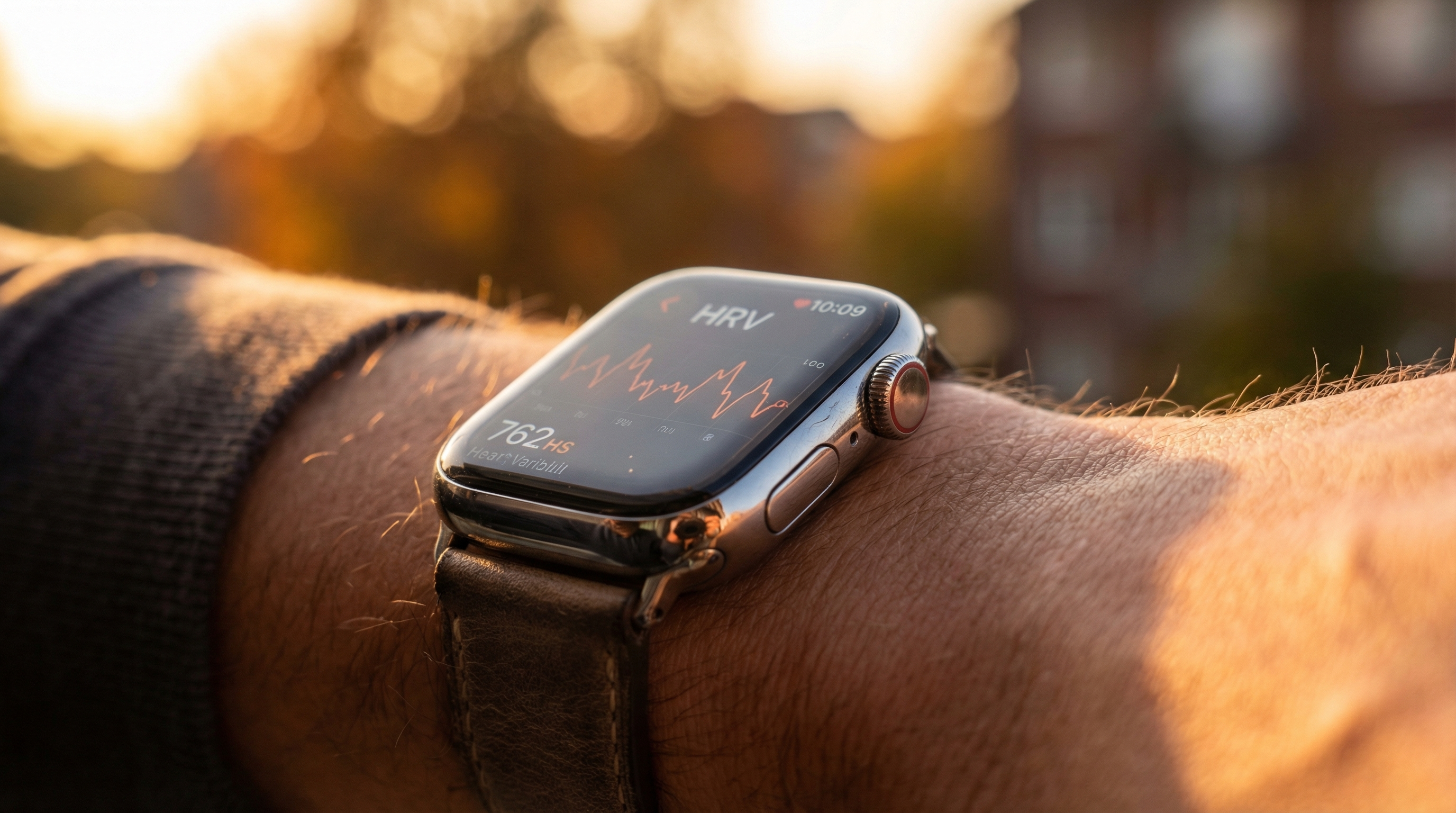
Dhruv was pre-diabetic at 28. Every wearable measured his decline. None of them told him how to reverse it. This is the origin story of Vayu, and the difference between Medicine 2.0 and Medicine 3.0.
Mar 22, 2026