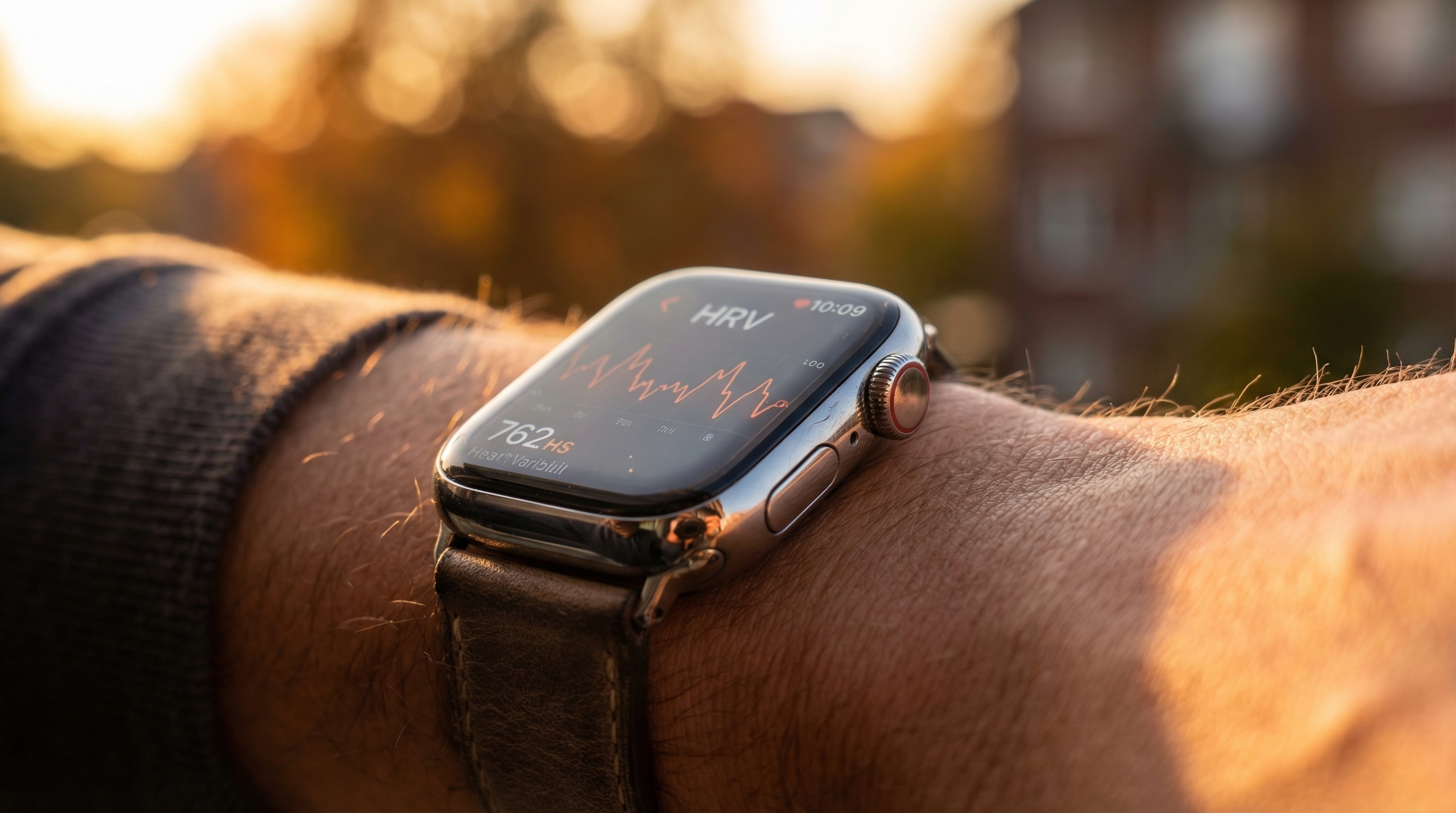
Medicine 2.0 Told Me I Was Sick. Medicine 3.0 Showed Me How to Fix It.
I got my blood work back at 28 and the doctor said the word "pre-diabetic" like it was a weather forecast. Matter-of-fact. Mildly concerned. Then she handed me a pamphlet.
Try this technique in Vayu, free download
Haptic guidance on Apple Watch and Wear OS. Your first session is free.
The pamphlet said to eat less sugar and exercise more. That was it. That was the intervention.
I remember sitting in my car afterward thinking: I have more data on my phone than any doctor had access to ten years ago, and the best we can do is a pamphlet?
What Medicine 2.0 Gets Right — And Wrong
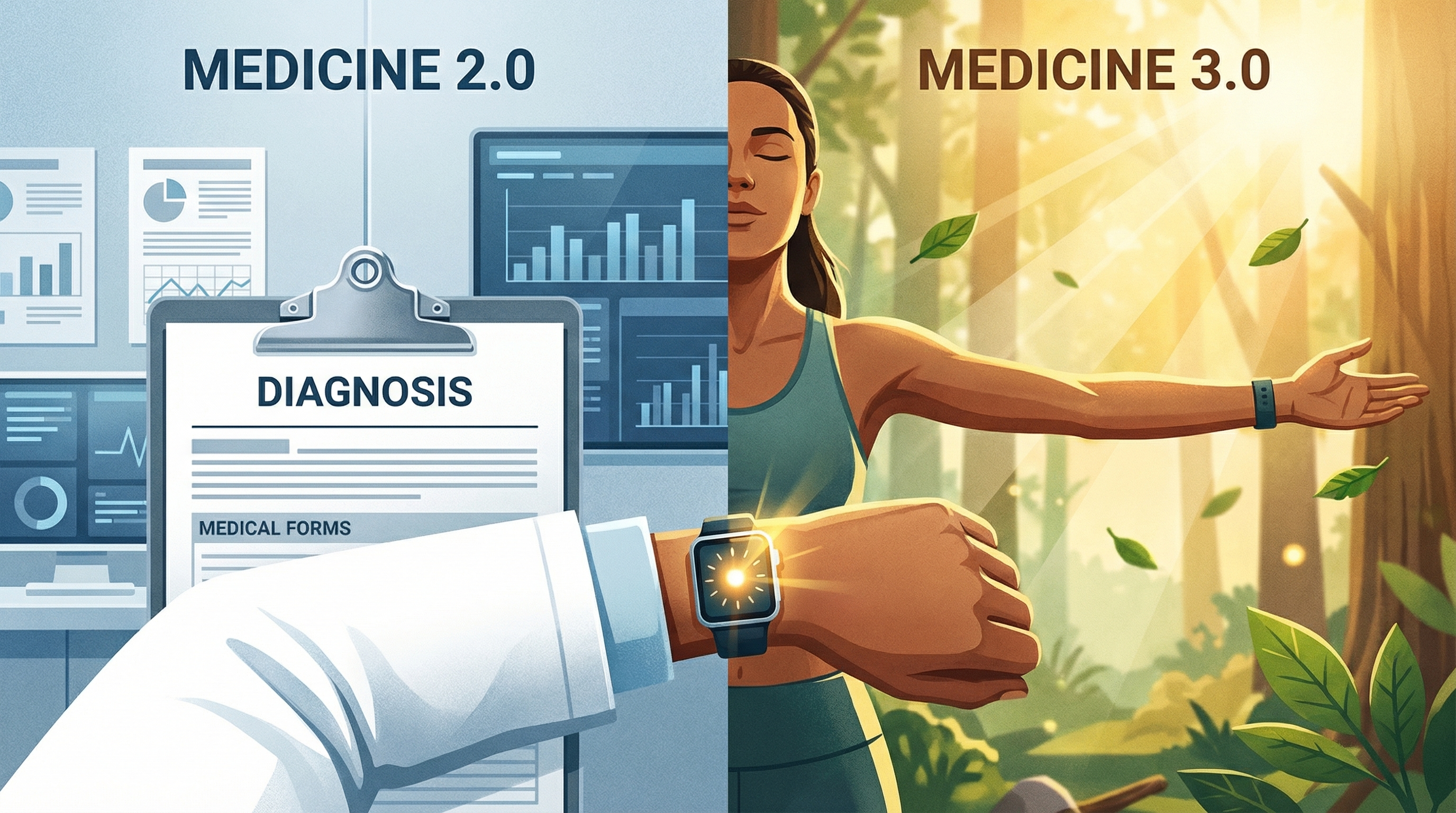
Medicine 2.0 is extraordinary at what it was designed for: diagnosing acute illness and crisis intervention. You show up with chest pain, they run an EKG, they save your life. That system is genuinely miraculous.
But when you show up with a slow-motion metabolic disaster — pre-diabetes, chronically elevated cortisol, deteriorating HRV — Medicine 2.0 hands you a pamphlet. It was never designed to catch you on the way down.
Peter Attia describes this as the fundamental flaw of Medicine 2.0: it waits for disease to fully arrive before acting. By the time a patient has Type 2 diabetes, there have been 10-15 years of reversible metabolic dysfunction that was invisible to the system because nothing had yet crossed a clinical threshold.
I was living that gap in real time. And I had no idea how deep it went.
Going Data-First
I did what any engineer would do. I bought an Oura ring. I tracked my HRV every morning. I got a continuous glucose monitor. I started logging sleep, food, and exercise with obsessive precision.
Within three months, I had a richer picture of my physiology than any annual physical had ever given me. I could see that my HRV crashed after two glasses of wine. That my glucose spiked when I skipped breakfast. That my sleep quality was inversely correlated with how late I worked.
The data was incredible. The problem: none of the apps could tell me what to do with it.
Oura gave me a "Readiness Score." Whoop gave me a "Strain Score." Apple Watch gave me a ring to close. All of them described my state. None of them changed it.
I was being measured. Nobody was intervening.
The Missing Piece Was Breath
The breakthrough came accidentally. A friend dragged me to a breathwork class. Twenty minutes of structured pranayama — a 1:2 inhale-to-exhale ratio — and my post-session HRV was higher than it had been in months.
I went home and looked up the research. It was staggering. A 2018 systematic review in Frontiers in Human Neuroscience by Zaccaro et al. found that slow breathing techniques at around 6 breaths per minute directly increase HRV, activate the vagus nerve, and shift the autonomic nervous system from sympathetic to parasympathetic dominance. Reductions in anxiety, depression, and arousal symptoms were documented across 15 rigorous studies.
This wasn't woo. This was physiology. And it was the first thing I'd found that didn't just measure my state — it changed it.
I started building what I wished had existed when I got that blood work back. A system that reads your biometric signal in real time, meets you at the exact moment your nervous system needs support, and guides you through a precisely calibrated breathing protocol to actually move the needle. Not a score. An intervention.
Medicine 3.0 Is Personal
The pre-diabetes resolved. My fasting glucose is normal. My HRV is the highest it's been in my adult life. I'm 30 now and I feel physiologically younger than I did at 28.
What changed wasn't willpower. It wasn't a better app telling me more things. What changed was finding an intervention that worked — one grounded in real-time biofeedback and a practice with thousands of years of empirical backing, now validated by modern neuroscience.
That's what we built with Vayu. The app uses live HRV data from your Apple Watch or WearOS device during every breathing session. You can see your nervous system respond in real time. Haptic guidance keeps you in the optimal breathing pattern without staring at a screen. And the data shows you what actually works for your body.
Medicine 3.0 isn't one-size-fits-all. It's personalized, proactive, and — most importantly — it actually does something.
If you've ever been handed a pamphlet and thought there has to be something better than this, there is.
Download Vayu and try your first session free. Your nervous system is ready when you are.
Practice These Techniques with Vayu
Haptic breathing guidance on Apple Watch and Wear OS, paced on your wrist so you do not need the screen. Developed with the SFU Metacreation Lab, supported by NRC IRAP. Your first session is free.
Continue Reading

The Three-Minute Window: Breathing for Faster Exercise Recovery
Heart rate recovery is one of the most useful markers in training. What slow breathing between sets actually does, what it does not do, and why hands on knees beats hands on head.
Sep 15, 2026

Breathing at Altitude: What Changes and How to Adapt
Why you cannot sleep above 3,000 metres, what pressure breathing does, and the warning signs that mean descend now rather than breathe through it.
Sep 15, 2026

Teaching Kids to Breathe: What Actually Works, by Age
Telling an upset child to take a deep breath usually fails, for three specific reasons. A developmental guide to breathing games that work from age three to the teenage years.
Sep 15, 2026