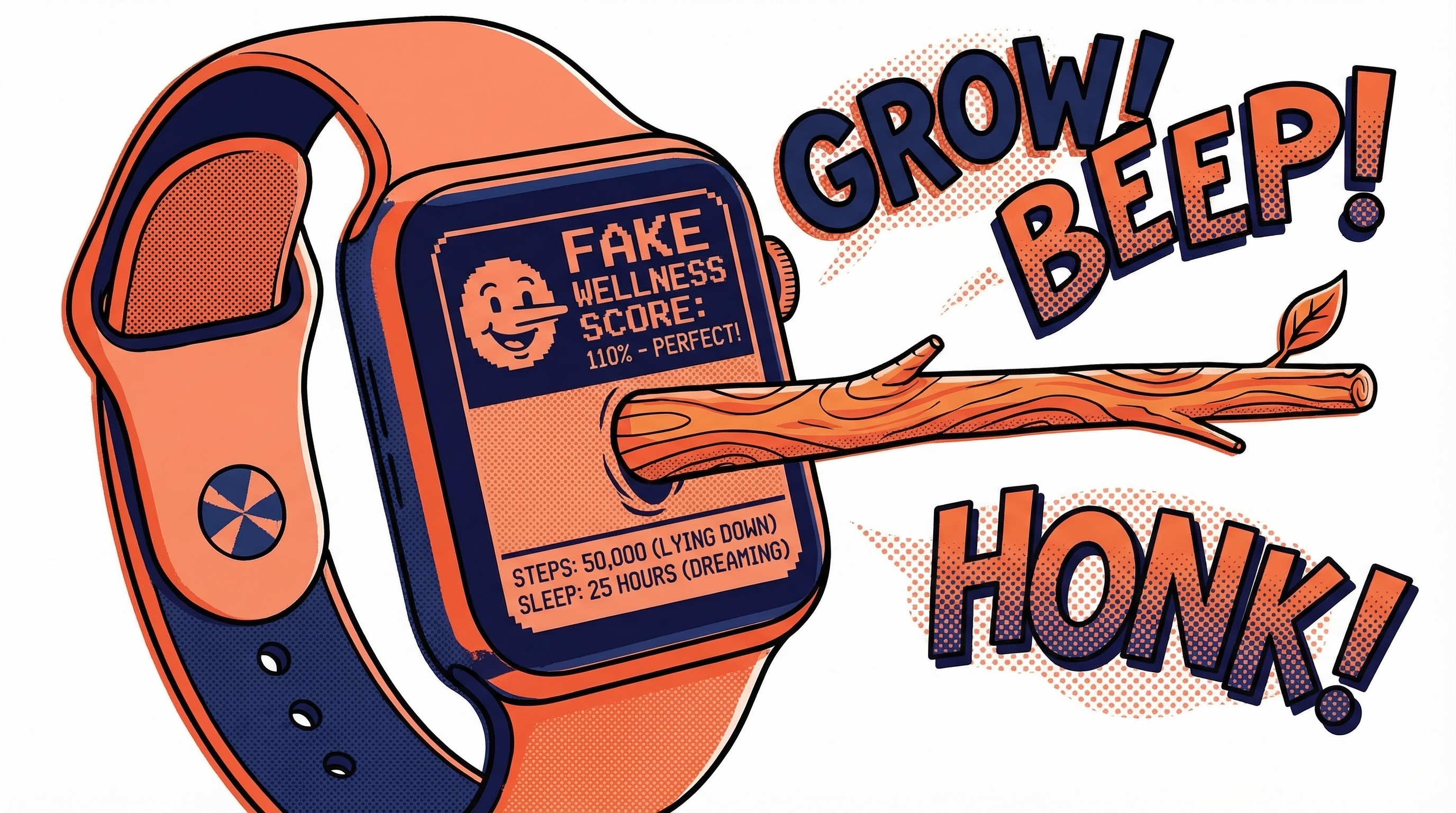
Why Your Wearable Is Lying to You
My Oura ring knows more about my body than my doctor does. It tracks my HRV, my skin temperature variance, my respiratory rate, my sleep stages, my resting heart rate. Every morning, it synthesizes all of that into a single number between 0 and 100.
Try this technique in Vayu, free download
Haptic guidance on Apple Watch and Wear OS. Your first session is free.
My Readiness Score yesterday was 67.
Cool. Now what?
The Score Is Not the Answer
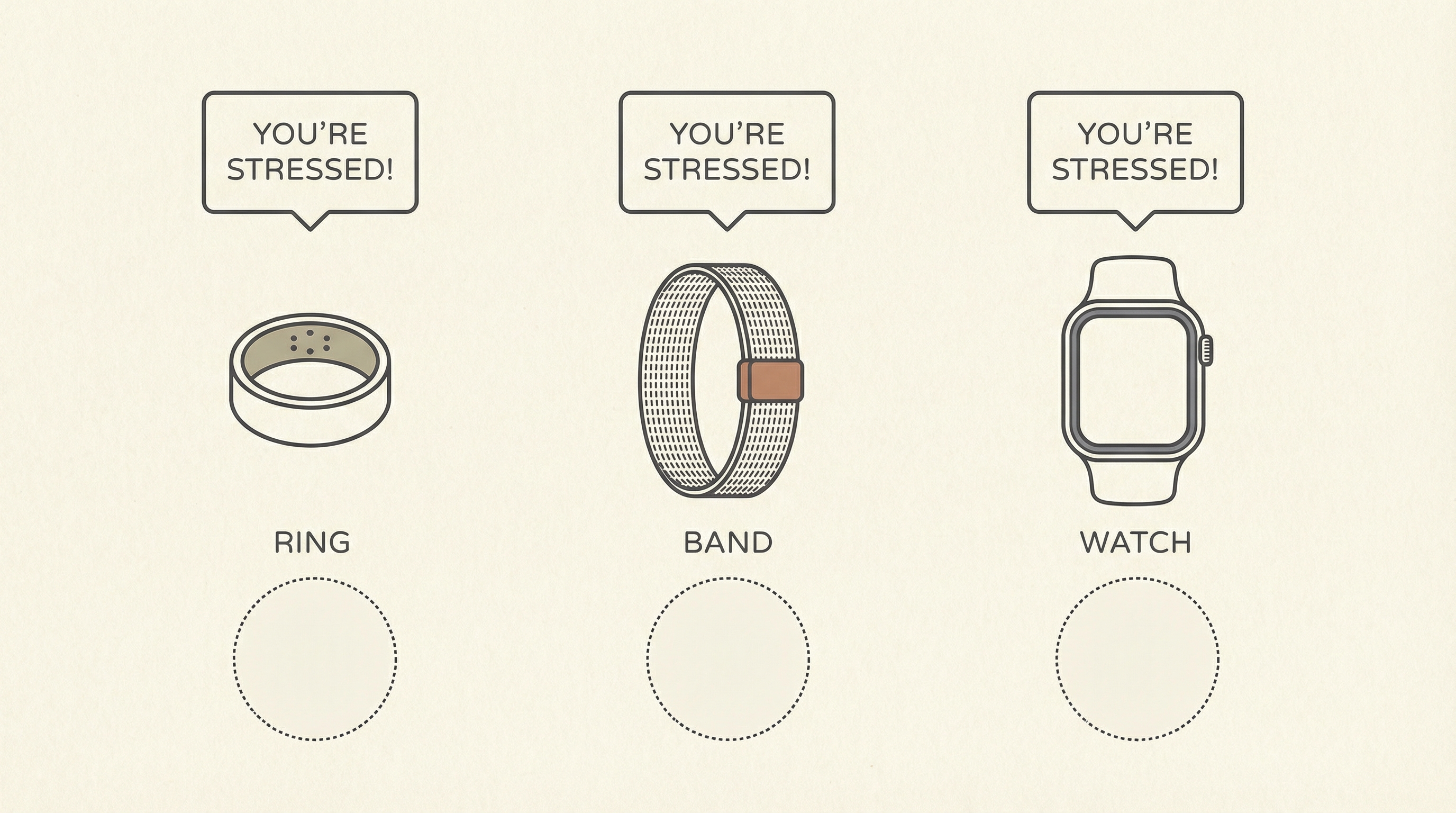
Here's what every major wearable on the market has in common: they all stop at the diagnosis. Oura tells you your readiness. Whoop tells you your recovery. Apple Watch tells you your heart rate variability trend. WHOOP even sends you an alert when you're in the red.
But then what? What does a 67 mean practically? Should I skip the gym? Meditate? Go to bed earlier tonight? The app doesn't say. It shows you the data and leaves you to figure it out.
This is the core problem with the current generation of consumer health tech: they've perfected measurement, but they've abandoned intervention entirely.
Data without action isn't Medicine 3.0. It's just surveillance.
What Medicine 3.0 Actually Requires
Peter Attia's framework for Medicine 3.0 is built on proactive, personalized care, catching dysfunction before it becomes disease. But the tool set he describes requires more than passive monitoring. It requires behavioral change in response to real-time data.
The gap is enormous. Your watch can tell you your sympathetic nervous system is fired up right now. It cannot tell you to breathe in for 4 seconds and out for 8 to activate your vagus nerve and bring your cortisol down. That would require an intervention layer that currently doesn't exist in any mainstream wearable platform.
Apple Health is a magnificent data warehouse. It has never sent anyone a breathing protocol tied to their live HRV reading.
The Intervention Gap
Research published in Applied Psychophysiology and Biofeedback has shown that HRV biofeedback (real-time feedback on your autonomic state paired with guided breathing) produces measurable reductions in stress, anxiety, and blood pressure that passive monitoring simply cannot achieve. The feedback loop is the mechanism. Watching your HRV climb in real time as you slow your breath creates a neurological learning process that reshapes your baseline over weeks.
But this requires the wearable to do more than watch. It has to respond.
Your Oura ring cannot do this. Neither can your Whoop. Apple Watch can measure your HRV. It cannot guide your nervous system back into coherence.
The devices are lying to you, not by giving you false data, but by implying that the data is the point. It isn't. The behavior change is the point. The data is just the setup.
What Closing the Loop Actually Looks Like
Vayu was built specifically to close this loop. When you open the app, it reads your live HRV from your Apple Watch or WearOS device, assesses your current autonomic state, and delivers a haptic-guided breathing session calibrated to move you toward coherence. You watch your HRV respond in real time. The feedback isn't a score. It's a visual and tactile experience of your nervous system shifting.
Over 30,000 users across 40 countries. 64% still practicing at 30 days, a retention rate that makes most wellness apps look like they're barely trying.
The wearable you already own was always capable of being part of an intervention. It just needed something to translate the data into action.
That's what we built.
Try Vayu free and see what your wearable data can actually do when it's connected to a real intervention.
Practice These Techniques with Vayu
Haptic breathing guidance on Apple Watch and Wear OS, paced on your wrist so you do not need the screen. Developed with the SFU Metacreation Lab, supported by NRC IRAP. Your first session is free.
Continue Reading

The Three-Minute Window: Breathing for Faster Exercise Recovery
Heart rate recovery is one of the most useful markers in training. What slow breathing between sets actually does, what it does not do, and why hands on knees beats hands on head.
Sep 15, 2026

Breathing at Altitude: What Changes and How to Adapt
Why you cannot sleep above 3,000 metres, what pressure breathing does, and the warning signs that mean descend now rather than breathe through it.
Sep 15, 2026

Teaching Kids to Breathe: What Actually Works, by Age
Telling an upset child to take a deep breath usually fails, for three specific reasons. A developmental guide to breathing games that work from age three to the teenage years.
Sep 15, 2026