Breathwork vs Meditation: Which to Use, and When


Updated September 2026 · ~7 min read
Breathwork changes your physiology fast, so it wins when you need to shift state right now: an anxiety spike, winding down for sleep, or settling before a hard conversation. Meditation trains attention slowly, so it wins for the long game: less reactivity, less rumination, steadier focus over months. They are not rivals. They do different jobs, and the honest question is never "which is better" but "which fits the moment in front of me."
Try this technique in Vayu, free download
Haptic guidance on Apple Watch and Wear OS. Your first session is free.
That framing matters because the internet loves a winner. You will find plenty of pages declaring one practice superior. The evidence does not support a blanket verdict in either direction, and this post will not pretend otherwise.
Safety note
- Slow breathing at a comfortable pace is appropriate for most people. Intensive breathing exercises and breath holds are not.
- If you are pregnant, or have a heart, blood pressure, or respiratory condition, epilepsy, or a history of panic attacks, do not start intensive breathing or breath holds without advice from your clinician.
- Read who should not do breathing exercises before starting, and stop if you feel dizzy, chest pain, or rising panic.
What is the actual difference between breathwork and meditation?
The difference is direction of travel.
Meditation works top-down. You train the mind and the body follows over time. In most forms you sit, rest attention on something (the breath, a sound, a body sensation), notice when the mind wanders, and bring it back. The breath is usually just an anchor. What you are training is the noticing and the returning, and repeated enough, that loosens automatic reactivity.
Breathwork works bottom-up. You change the body's inputs and the mind follows within minutes. Respiration is the one autonomic process you can take over on purpose, which makes it a direct lever on your nervous system. Slow, exhale-weighted breathing stimulates the vagus nerve and engages the baroreflex, the pressure-sensing loop tying breathing rhythm to heart rate, and heart rate variability tends to rise. If HRV is new to you, start with what HRV is and why it matters for breathwork.
One approach trains the operator. The other adjusts the machine. Most people who stick with either end up doing both.
Which one works faster for stress?
Breathwork, and it is not close. A structured breathing pattern can shift your autonomic state inside a few minutes. Meditation's benefits are real but they accrue over weeks of practice, not over the ninety seconds you have before you walk into a meeting.
The clearest recent evidence for the speed of breathwork comes from Balban et al. 2023, published in Cell Reports Medicine under the title "Brief structured respiration practices enhance mood and reduce physiological arousal." The study ran out of Stanford with N=108 participants in the final analysis. Each person did 5 minutes a day for 28 days, randomized to one of four practices: three different breathwork patterns, or mindfulness meditation as the comparison.
Two findings stand out. First, all three breathwork arms improved positive affect more than the mindfulness meditation arm. Second, among the breathwork patterns, cyclic sighing performed best. Cyclic sighing is a slow practice built around extended exhales, a close cousin of the single physiological sigh you might use once to reset. You can read the full technique in our guide to cyclic sighing.
One more detail is worth holding onto, because it is the part that actually predicts results: the effect scaled with the number of days practiced. The people who did it more days got more benefit. The practice you will actually repeat beats the one that scores better on paper.
Read carefully, this does not say breathwork beats meditation in general. It says that in this one well-run trial, over 28 days, on short-term self-reported mood, cyclic sighing beat mindfulness meditation. That is a specific claim, and it is the honest one.

Which one is better for long-term focus and rumination?
Here the picture tilts the other way, and it is important to say so plainly. Meditation, particularly mindfulness and focused-attention styles, has a far larger and older body of research behind it for outcomes like sustained attention, emotional regulation, and reducing rumination (the mental loop of chewing the same worry over and over). These are trait-level changes, the kind that show up after eight weeks or eight months, not after five minutes. Breathwork has not been studied nearly as extensively for those slow, cumulative outcomes.
So if your goal is to be a less reactive person in six months, to interrupt the 2 a.m. thought spiral, or to hold attention on hard work for longer, meditation has the stronger evidence base. Breathwork can support that work, and a few slow breaths are a reliable on-ramp into a sit, but the trained-attention benefits come from the training, not the breathing pattern. This is why "which is better" is the wrong question. The two practices answer different questions.
How do breathwork and meditation actually work in the body?
Both routes touch the autonomic nervous system from opposite ends.
Breathwork's mechanism is mechanical and fast. A long exhale increases vagal tone, which slows the heart and nudges you toward the parasympathetic "rest and digest" state. Extended-exhale patterns like cyclic sighing lean on exactly this. Slow paced breathing near the low end of your comfortable range engages the baroreflex and tends to lift heart rate variability, a rough marker of how flexibly your nervous system can shift gears. For the practical version, box breathing and slow resonant breathing are the most studied entry points.
Meditation's mechanism is slower and more indirect. By repeatedly practicing attention and non-reactive noticing, you appear to change how you appraise and respond to stressors over time, rather than yanking a physiological lever in the moment. The payoff is a lower baseline of reactivity you carry into the next stressor, not a single calm-down. Use the breath when you need the body to change now, and meditation when you want the mind's default settings to change over time.

Breathwork vs meditation: a decision table
Match the tool to the moment. Reach for whichever row you are actually living in.
| Situation | Reach for | Why |
|---|---|---|
| Acute anxiety spike, panic rising | Breathwork | Fastest lever. Extended-exhale breathing shifts autonomic state in minutes, faster than you can meditate your way calm. |
| Winding down for sleep | Breathwork | Slow, exhale-weighted breathing lowers arousal at bedtime. A few rounds of a long-exhale pattern beats trying to "clear your mind." |
| Settling before a hard conversation or performance | Breathwork | A 60 to 90 second reset (a few physiological sighs or box breaths) steadies you without needing quiet or time. |
| Short daily mood lift | Either, edge to breathwork | Balban et al. 2023 found 5 minutes a day of cyclic sighing improved mood more than meditation over 28 days. |
| Building long-term focus and attention | Meditation | Deeper, larger evidence base for sustained attention and trait-level change. Breath can be the on-ramp; the training does the work. |
| Breaking a rumination loop (recurring worry) | Meditation | Attention training targets the loop itself over weeks. Breathwork calms the moment but does not retrain the pattern. |
| You have 5 minutes and low motivation | Breathwork | Lower barrier to start, and the effect scaled with days practiced. Consistency beats intensity. |
| You want a lasting shift in how you relate to stress | Meditation | Slow, cumulative, trait-level. This is what a sustained practice is built for. |
If you only remember one line: breathwork for state, meditation for trait. State is how you feel in the next five minutes. Trait is who you tend to be over the next five months.
Should you do both?
For most people, yes, and they stack neatly. The common pattern is to use breathwork as the fast tool and the meditation on-ramp: a minute or two of slow breathing lowers arousal enough that sitting to meditate feels less like a fight. Then meditation does the long, quiet work that breathwork was never designed to do. You are not choosing a camp. You are keeping two tools on the belt and picking the right one for the job.
If you are brand new and want a structured way in, a guided sit is the easiest place to start. Our free guided Vipassana meditation in the Vayu app walks you through it without jargon, and you can pair it with a short breathing practice on either side.
What are the limitations of the evidence?
This is the part most comparison posts skip. The Balban 2023 result is genuinely encouraging, but it is one study, and it has boundaries:
- Healthy adults only. Participants were healthy volunteers, not people with diagnosed anxiety, depression, or other conditions. Results may not transfer to clinical populations.
- 28 days is short. The trial ran for four weeks. It tells you about short-term mood, not what happens after six months, and not whether the mood benefit persists once daily practice stops.
- Self-reported mood. The mood and affect outcomes were self-reported. Self-report is standard in this field and still meaningful, but it is softer than an objective clinical endpoint.
- One well-run trial is not a literature-wide verdict. A single study, however clean, is a data point, not a consensus. It should update your thinking, not settle the debate.
- Meditation's long-term base is larger. For attention, rumination, and trait-level change, meditation has a much deeper and longer research record than breathwork does. Do not read "cyclic sighing beat meditation on short-term mood" as "breathwork beats meditation," because those are different outcomes on different timescales.
The honest synthesis: breathwork produces a fast state change through the body, meditation produces trained attention over time, and in this one Stanford trial cyclic sighing beat mindfulness meditation specifically on short-term mood. Anyone selling you a cleaner story than that is selling.
None of this is medical advice. Breathing and meditation are low-cost, low-risk practices that work well alongside care, not as a replacement for treatment. If you have a respiratory or cardiovascular condition, or you are managing a mental health diagnosis, talk to your clinician before starting an intense practice.
Frequently asked questions
Is breathwork better than meditation?
No, not as a blanket claim. They do different jobs. Breathwork changes your physiological state within minutes and is the better tool for acute stress, sleep, and pre-performance nerves. Meditation trains attention over weeks and months and has the deeper evidence base for focus and reducing rumination. In one 2023 Stanford trial (Balban et al., Cell Reports Medicine, N=108), cyclic sighing improved short-term mood more than mindfulness meditation, but that is a narrow, specific finding, not proof that breathwork wins in general.
Which is faster for calming down in the moment?
Breathwork. A structured pattern, especially one with long exhales, can shift you toward a calmer state in one to five minutes. Meditation's benefits build over a longer horizon and are not designed for an instant reset.
What breathwork did the Stanford study find worked best?
Cyclic sighing, a slow practice built around extended exhales. In Balban et al. 2023, participants who did 5 minutes a day for 28 days saw the largest mood improvement from cyclic sighing, ahead of two other breathwork patterns and ahead of mindfulness meditation. The benefit also grew the more days people practiced.
Can I do both breathwork and meditation?
Yes, and it is a common combination. A minute or two of slow breathing lowers arousal and makes sitting to meditate easier, then meditation does the slower attention training that breathwork is not built for.
Where this leaves you
Stop shopping for a winner. Keep breathwork for the moments that need to change now, and keep meditation for the person you want to be over the next several months. The Stanford data is a good reason to try five minutes of cyclic sighing on a low day, and the broader meditation literature is a good reason to keep sitting. If the hard part is remembering to practice, or knowing whether it is working, a guided practice with haptic pacing on the wrist and HRV feedback after each session lowers the barrier.
Practice These Techniques with Vayu
Haptic breathing guidance on Apple Watch and Wear OS, paced on your wrist so you do not need the screen. Developed with the SFU Metacreation Lab, supported by NRC IRAP. Your first session is free.
Continue Reading
Breathwork questions people actually ask on Reddit (honest answers)
Real questions from r/breathwork, r/Anxiety, and r/Meditation answered honestly: why deep breathing sometimes makes anxiety worse, how long results take, what Wim Hof is actually for, and more.
Jun 10, 2026

Breathwork Technology in 2026: Apps, Wearables and Biofeedback Compared
How breathwork technology works in 2026: haptic guidance on the wrist, HRV and biofeedback, and passive trackers like Oura and Garmin, compared on what each actually ships today.
Feb 4, 2026
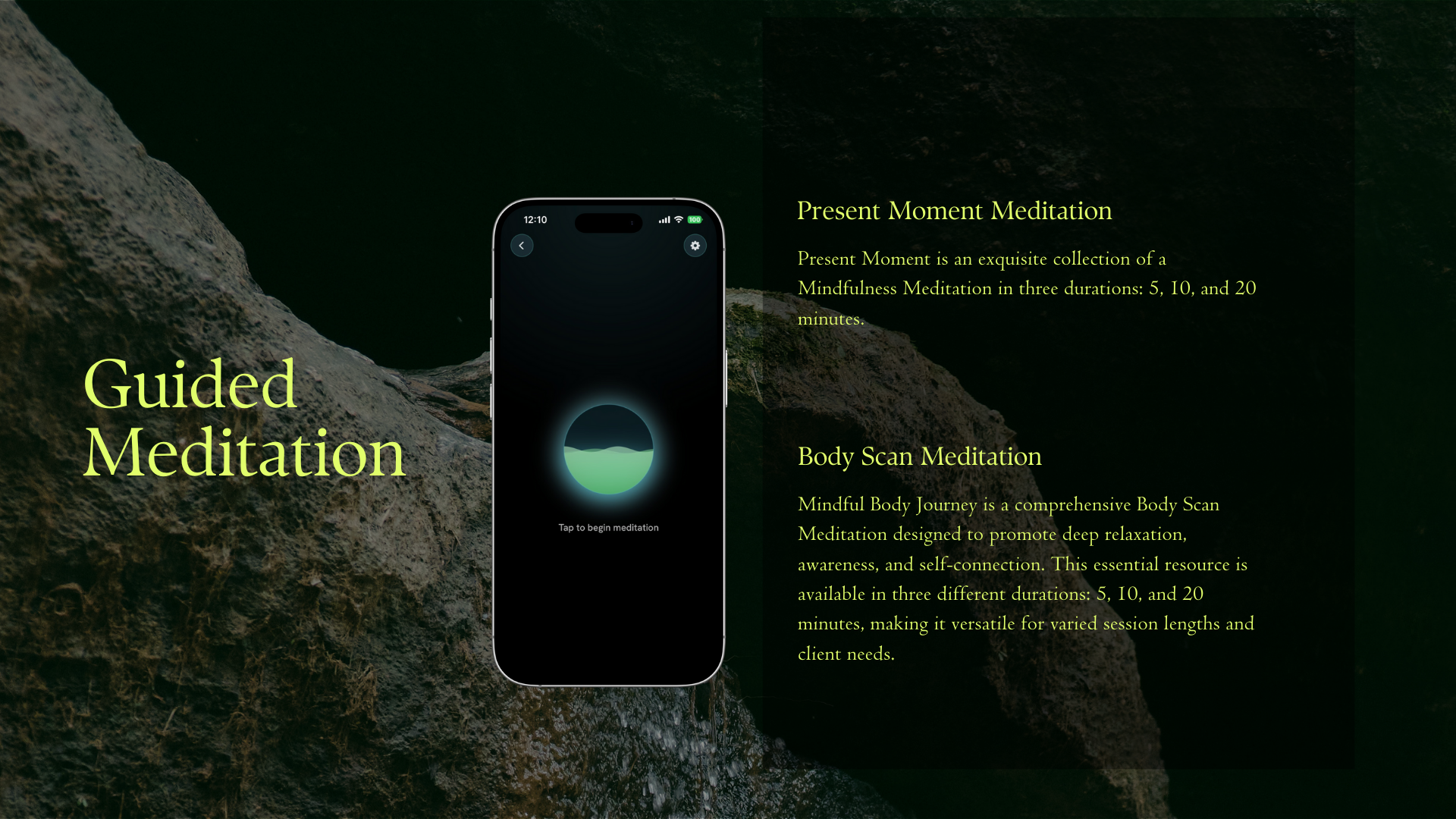
Introducing Guided Meditation: Free Guided Meditations Now in Vayu
Discover Vipassana Meditation in Vayu – completely free guided meditations with two styles, customizable durations, voice options, and background music. Works offline, no subscription required.
Jan 29, 2026